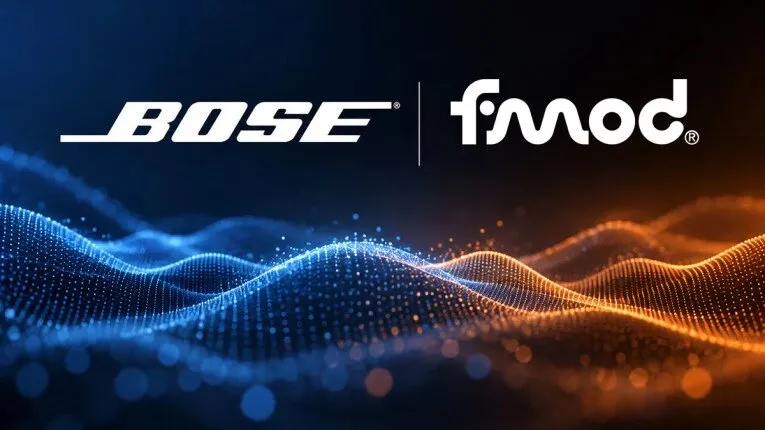
On October 1, 2026, Bose Corporation announced the acquisition of Firelight Technologies, the Melbourne, Australia-based company behind FMOD, an interactive audio engine well established in the video game industry. The deal brings the platform into Bose’s Audio Technology business and expands its capabilities in audio that responds to events in real time. The financial terms and other conditions of the transaction remain confidential.
What Bose gets with FMOD
Firelight’s platform combines two parts that usually go together in game development. On one side, FMOD Studio is the authoring environment where sound designers and composers build events, mixes and adaptive music. On the other, the FMOD Engine handles real-time playback and is cross-platform: it is designed to integrate with Unity, Unreal Engine and custom technology, and runs on consoles, desktop computers, mobile devices and the web. Firelight describes FMOD as an end-to-end solution developed over 25 years.
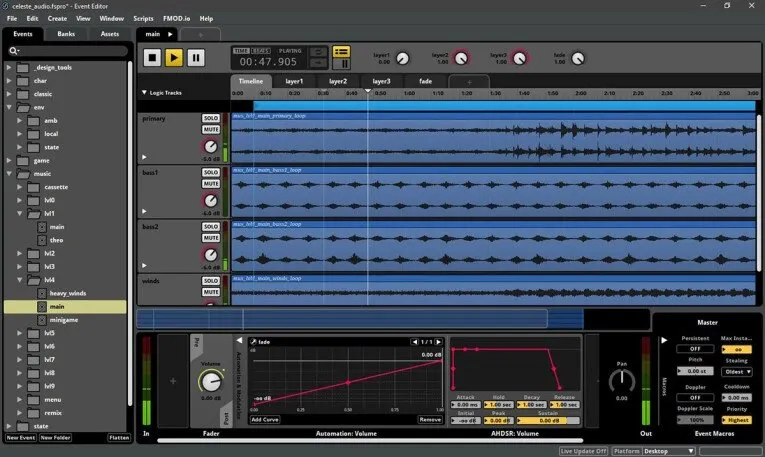
That approach is what sets FMOD apart from a simple player. The event editor allows sounds to be triggered by player actions and makes music change with the game state, while the mixer provides routing, DSP processing and snapshots for dynamic mixing. The Live Update feature lets designers audition changes on a running game, and the profiler allows events, parameters, voice activity and CPU usage to be inspected. The result is an iterative workflow tied directly to the final application.
Why it matters beyond games
Gaming is the immediate focus of the announcement, but Bose also points to virtual and augmented reality, automotive and other interactive audio applications as longer-term opportunities. The company has not detailed specific products or integrations in those areas, so for now the acquisition reads as a platform bet: gaining the tools with which adaptive sound is created and run, rather than a finished product.
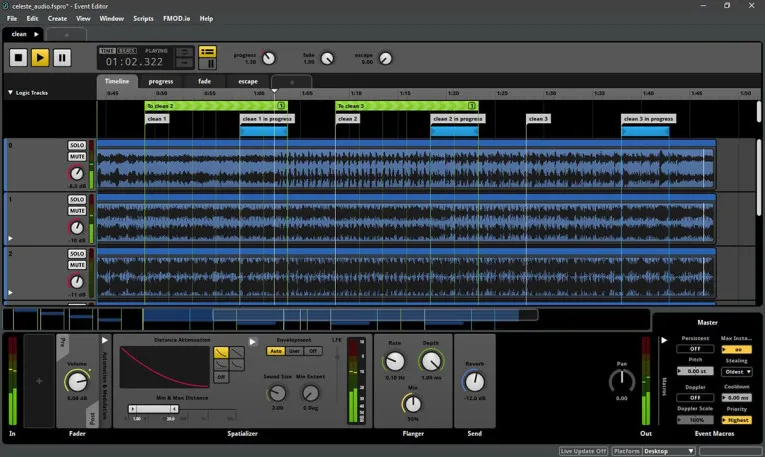
That is where the value lies for anyone developing audio products: FMOD connects sound design with application behaviour. Unlike a fixed track, the audio is decided at runtime based on what happens on screen, something that goes beyond entertainment and appears in any environment where sound must respond to context.
One more move in Bose’s acquisition strategy
The acquisition follows Bose’s purchase of StreamUnlimited Engineering in June 2026. The two pieces complement each other: StreamUnlimited supplies software, hardware modules and integration services for connected audio products, while Firelight adds tools for creating and implementing adaptive sound and music. Together, they outline an interest in audio technologies that other companies and platforms can build into their own products.
Bose is not a publicly traded company and keeps an unusual ownership structure: since 2011, most of its shares have been held by MIT, which receives dividends but takes no part in management. That independence gives it a longer investment horizon than a company tied to its quarterly report, and it explains deals such as this one or the McIntosh Group purchase, which in 2024 brought McIntosh, Sonus Faber and Sumiko under its umbrella. The company now organises its activity around four areas — premium consumer audio, automotive, audio technology and luxury audio — with centralised R&D and shared resources. The 2024 purchase of Sonus Faber showed how Bose aims to preserve differentiated brands while connecting them to a larger structure; Firelight fits that same logic, this time in the software arena.
What changes for developers and users
Bose says FMOD will remain open and broadly supported, with continued investment in the platform and in its community of developers, partners and customers. That is a central promise for a middleware business whose tools are integrated into projects built with different engines and deployment platforms: if support faltered, the studios that rely on it would be the first to notice.
“The acquisition of Firelight is a meaningful step forward in the Audio Technology business we’re building at Bose. Gaming represents a significant opportunity for our continued growth, and we believe our audio expertise can help creators deliver even better experiences for players,” says Nick Smith, president of Bose Audio Technology and chief strategy officer.
Brett Paterson, founder and CEO of Firelight Technologies, adds: “Joining Bose provides new opportunities to advance the FMOD roadmap while continuing to support the community that relies on it.”
For end users there is no immediate change: no product or integration derived from the deal has been announced. The practical consequence, if Bose’s commitment holds, is that the tool used to build the audio in many games — and, in the future, in virtual reality or automotive experiences — remains available and with planned development under an owner with more resources. The reasonable doubt is the usual one in this kind of purchase: how much of that independence survives once the middleware business stops being the centre of the company and becomes one piece inside a much larger corporation.