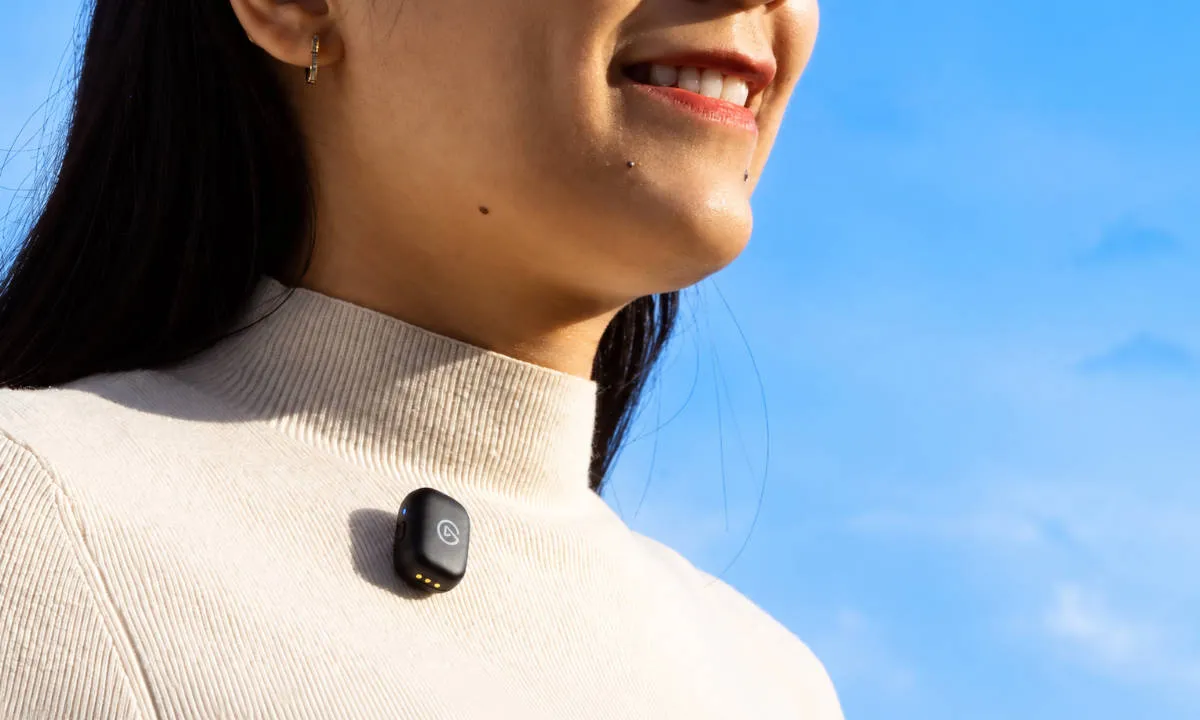
Elgato Wave Go: the first wireless microphone from Elgato, two in one
Elgato is already selling Wave Go for €99, its first wireless microphone designed to record outside of the desk. Until now, the firm’s audio — owned by Corsair — started when the creator sat in front of the computer; this model breaks that boundary with a two-piece system that functions as a lapel microphone and, with an accessory, as a handheld microphone.
One microphone, two formats
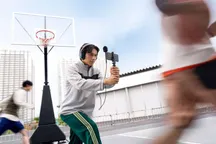
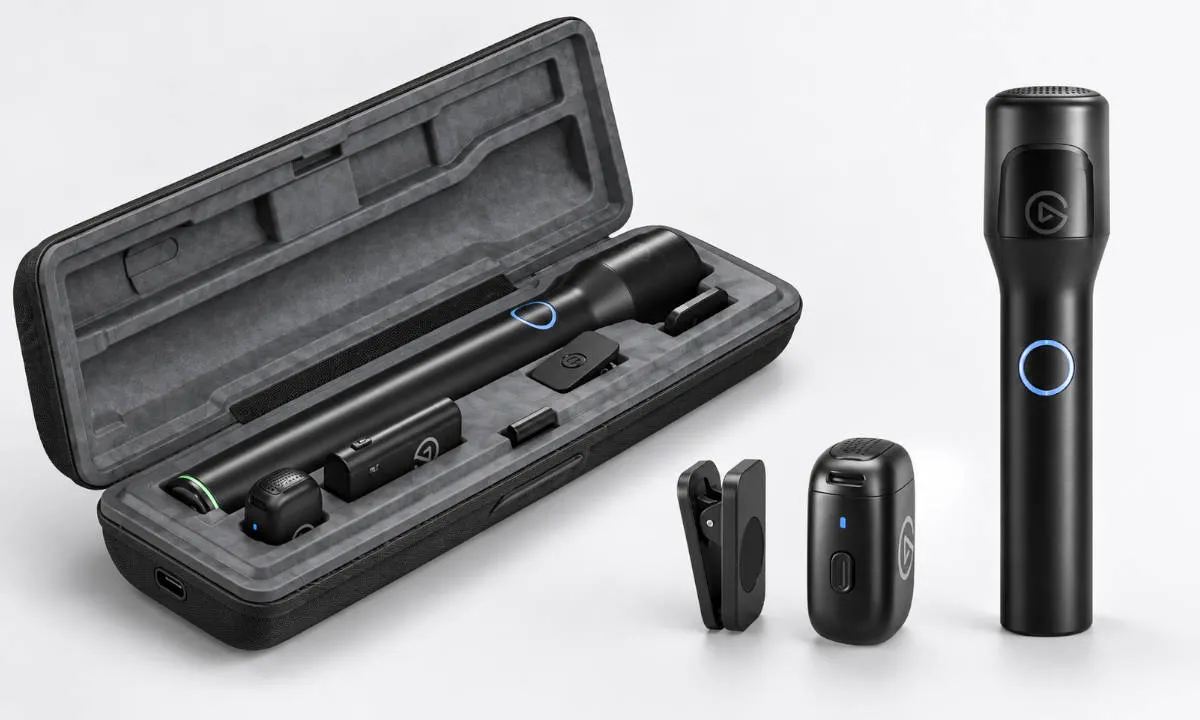
The central piece is a transmitter weighing just 7 grams that can clip onto clothing via a clip or magnetic plate. The leap comes with the Smart Handle: by inserting the transmitter into that handle, the setup behaves like a full-size handheld microphone, in the style of those used for interviews. The system itself detects which format it’s placed in and adjusts its operation, so switching from talking to camera to interviewing someone requires little more than physically moving the microphone.
That format change is supported by EQ Shift, the product’s most distinctive feature. Wave Go uses an omnidirectional electret condenser capsule and captures audio at 48 kHz and 24 bits, but applies a different tonal profile depending on how it’s used. In lapel mode it modifies equalization to reduce the mid-range excess that usually results from placement over clothing and recover presence in high frequencies; when entering the Smart Handle it switches to another profile that adds more body in bass and mids to compensate for the resonances of using that same capsule as a handheld microphone.
Onboard processing and 2.4 GHz wireless link
Elgato wanted recording outside the home not to require configuring sound before starting. Wave Go incorporates processing directly on the device — automatic gain, EQ, limiter, compressor, noise cancellation, noise gate, low-pass filter, among other functions — and can operate without an app. It’s not an isolated approach: moving that control to the microphone itself is the same idea behind proposals like the Shure MV6 Gen 2. The Wave Go app for iOS, iPadOS, and Android remains for control tasks: checking battery and pairing status, updating firmware, adjusting gain manually, or regulating noise reduction intensity.
The connection does not use Bluetooth. Wave Go operates over a dedicated 2.4 GHz wireless link, with a range of about 30 meters and latency of 24 milliseconds or less. The receiver connects via USB-C to smartphones, tablets, and computers, and includes a 5-watt pass-through port to power the device while recording. That approach also marks its limits: there is no support for Lightning-equipped iPhones nor connection intended for DSLR, mirrorless, or cinema cameras.
Battery life, price, and who it’s for
Battery life reinforces the mobile approach: the transmitter offers about eight hours per charge, but the Smart Handle carries its own battery and can recharge it around five times, raising the total to about 48 hours. Ten minutes of charging give nearly an additional hour. The included case recharges the assembly when connected via USB-C, though it does not incorporate a battery of its own. The receiver supports two transmitters at once, so you can record two people with a single receiver by adding a second microphone, which will sell for $29.99.
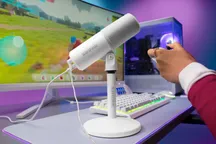
Leaving the desk doesn’t mean abandoning it. By connecting the receiver to a PC or Mac, Wave Go integrates with Wave Link 3.0, from where it can be mixed with system audio and other sources, as well as resorting to Voice Focus to reduce background noise and reverberation via AI.
Elgato Wave Go is already available for €99, and at launch it comes accompanied by a Day One Edition in Sky Blue color, limited to 1,000 units and exclusive to the company’s store. Is it worth it? For those who record with their phone and alternate between talking to camera and interviewing, the dual format and 48 hours of use are clear arguments against lapel kits with a separate receiver; anyone needing Lightning or connection to a camera will have to look at other options, since Wave Go doesn’t cover them.