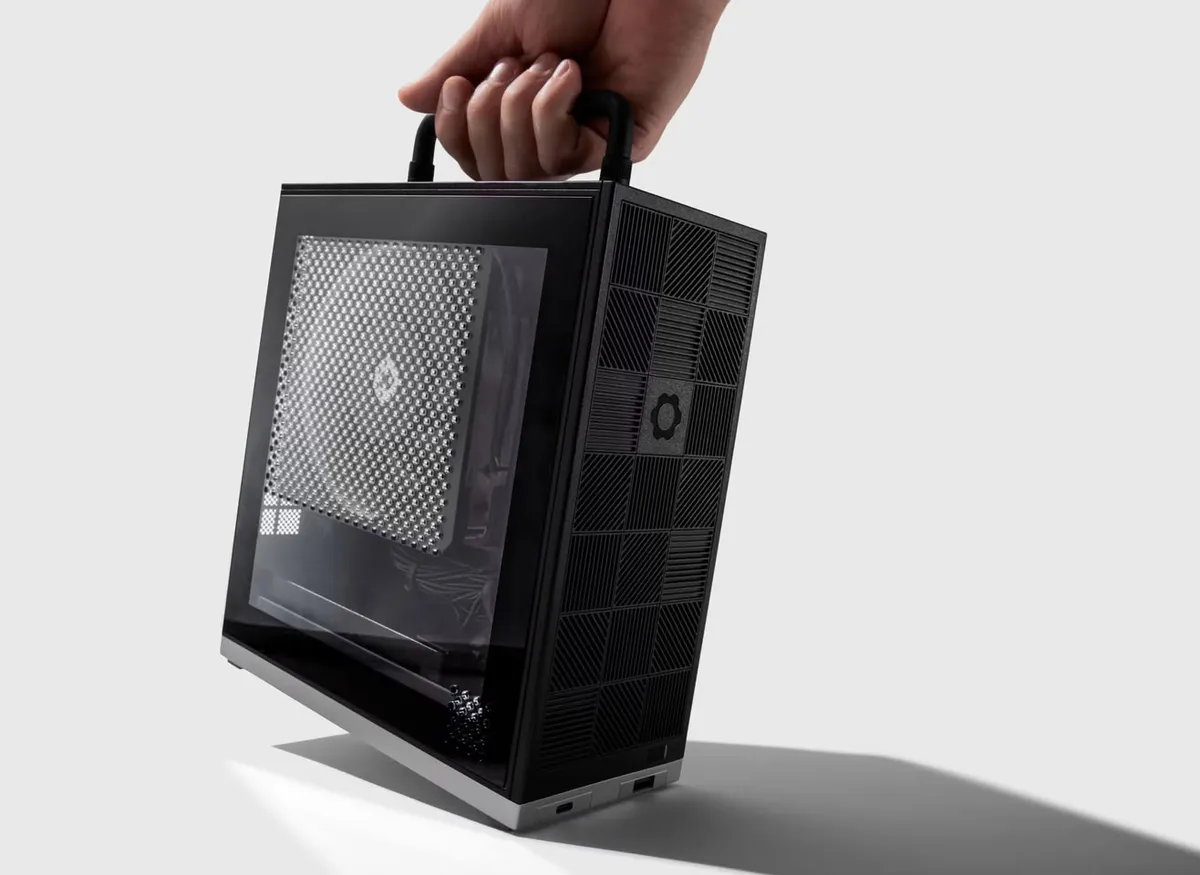
Framework opened pre-orders for its AMD Ryzen AI Max+ Pro 495-powered Desktop on September 30, and the first batch sold out within hours. The company had announced a single initial run because of the memory shortage, but demand was enough to clear it despite a starting price of $6,799.
A machine that sells on memory, not on its case
The DIY configuration with 192 GB of unified memory and no pre-installed storage starts at $6,799. The pre-built version, with a 2 TB NVMe 4.0 SSD and Fedora Linux pre-installed, climbs to $7,449. Those figures owe less to the chassis or the board than to the 192 GB of memory: it is the component that sets the price and the real reason this mini PC exists. The same Ryzen AI Max+ Pro 495 had already shown up in machines such as the SIXUNITED AXN88B-160M-YD laptop, with the same amount of unified memory.
The Framework Desktop sells out its first batch and opens a second run
Framework confirmed on X that it had managed to secure another batch of memory for its Gorgon Halo systems and opened a second limited batch of orders, still available and slated to ship in November. The company also warned that Framework Desktop prices will only rise in the coming months.
Prices for future batches may go up depending on the memory costs our suppliers give us. It is likely that the current pricing will be the lowest we can offer for 192 GB in the near and mid term. We also have 32 GB, 64 GB and 128 GB configurations of the Framework Desktop.
What changes for buyers
Framework has long been open about how memory prices have shaped its pricing, but it has not always gone well: the LPCAMM2 module increase sparked complaints from those who had pre-ordered the Framework 13 Pro, because it arrived after CEO Nirav Patel promised the price would not change ahead of the pre-order shipment date. With that precedent on the table, anyone who needs 192 GB should treat the current batch as the cheapest option in sight for the short term, and anyone who does not need that much has the 32 GB, 64 GB and 128 GB configurations as an alternative. Memory, not the case, remains the buying risk.