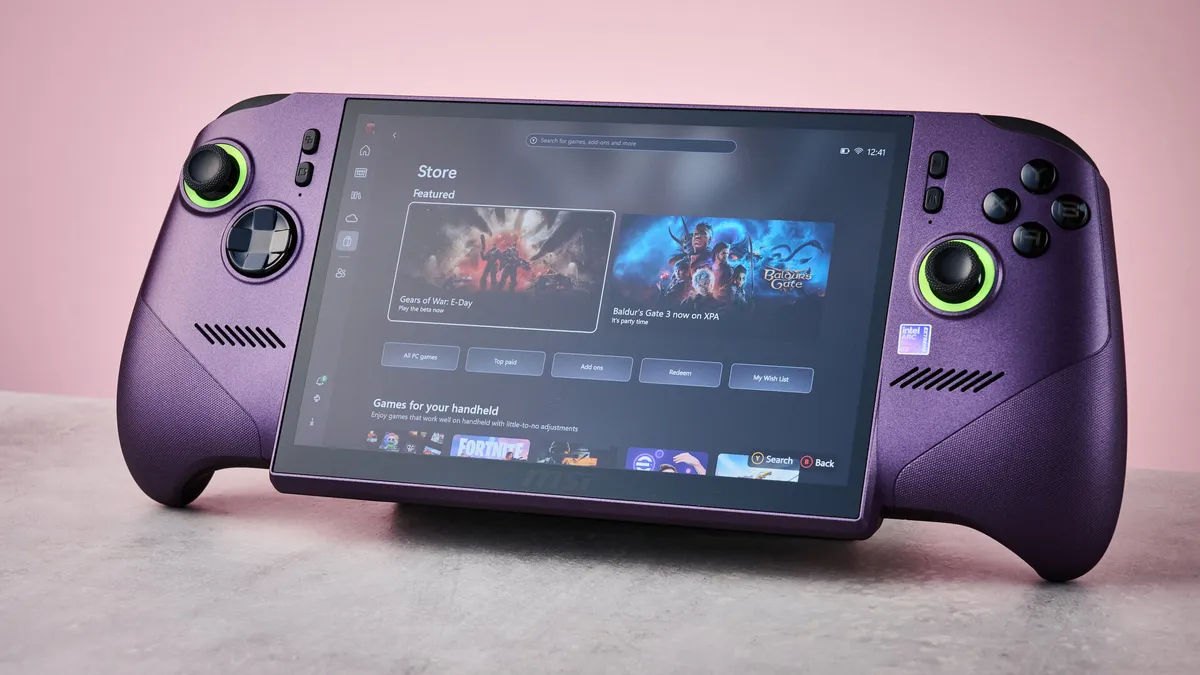
The MSI Claw 8 EX AI+ launched at a steep price: $1,799.99 officially, according to TechRadar’s review, for a Windows handheld that runs PC and Xbox games. Now a discount in the United Kingdom brings it down to £1,199.20 if the FLASH20 code is applied at Very, against the retailer’s £1,499 reference price. That is £299.80 less, close to 20%, and the offer expires on Sunday, November 22.
The question that matters is not how much it drops, but whether at that price it is convincing next to a Steam Deck or a ROG Ally. TechRadar is clear and says it plainly: it is the best handheld its reviewer has tested, and the new price makes recommending it much easier.
Performance: what TechRadar found in the MSI Claw 8 EX AI+
The review describes a machine that sits outside the usual handheld scale. It carries the Intel Arc G3 Extreme chip with the Arc B390 GPU, 32 GB of LPDDR5X-8533 memory and a 1 TB PCIe Gen4 NVMe SSD. The display is an 8-inch IPS touch panel, 1,920 x 1,200 pixels, 16:10 aspect ratio, 500 nits and up to 120 Hz.
In the outlet’s tests, the Claw 8 EX AI+ beat the ROG Xbox Ally X by as much as 78% in some 3DMark measurements. In games, TechRadar recorded a stable 60 frames per second in Clair Obscur: Expedition 33 even at high settings, and around 43 frames per second in Cyberpunk 2077 on the Ultra profile. In Baldur’s Gate 3 on Ultra it stayed around 38.
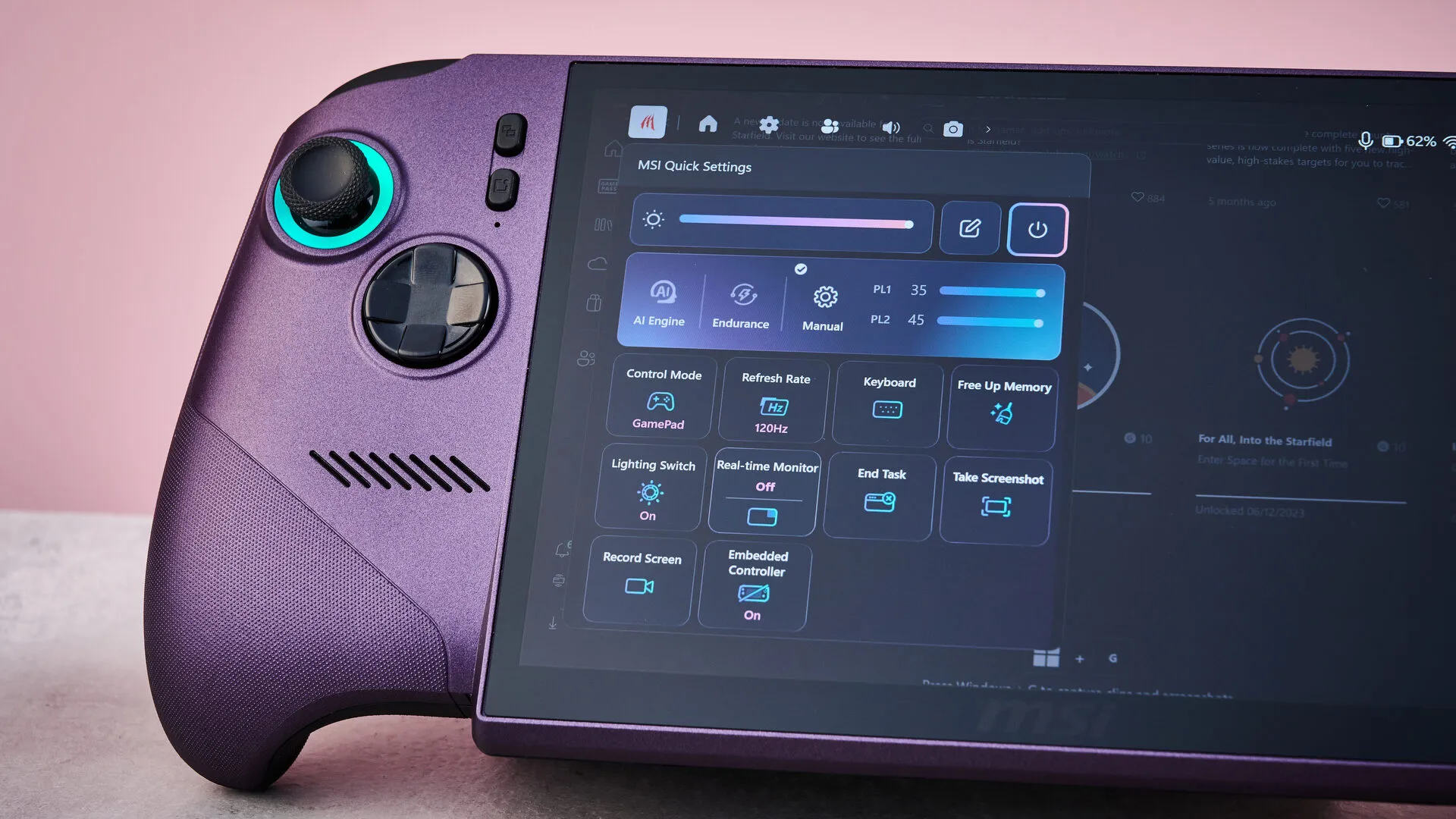
The weak point the review flags is battery life, and it is a relevant detail for anyone who plans to play away from home. With an 80 Wh battery, PCMark 10’s gaming battery test drained the charge in 1 hour 36 minutes on the first run, and in 1 hour 40 minutes and 2 hours 31 minutes on the following ones. The 65 W fast charging completes the cycle in roughly an hour and a half. Its 786 grams also make it the heaviest handheld the person who signed the review has held.
The price is still the argument against it
TechRadar wrote it plainly in its review: the launch price was equivalent to two Steam Deck OLEDs. And that remains the problem even after the cut. The ROG Xbox Ally X, its direct rival in the performance comparison, launched at $999.99 and £799.99. With the discount, the Claw costs almost 50% more than that, and the gap with the Steam Deck is even wider.
At the other end of the market, the Legion Go 2 topped $3,000 in its maxed-out configuration, so the Windows handheld segment has stretched upwards across the board. The difference is that the Claw does not compete with a catalogue of its own or with a closed system: it runs Windows and gives access to Steam, the Xbox store and Game Pass on the same device.
There lies the nuance the review hints at. What you pay for is not only power: it is playing the PC library with emulated keyboard and mouse, without depending on SteamOS compatibility or on the compromises a lower-wattage chip imposes.
What changes for anyone considering it
Three things, in order of importance.
The first is that the discount is British and expires on Sunday, November 22. There is no confirmed price for Spain in the published information, so anyone interested will have to check local availability before taking the reduction for granted.
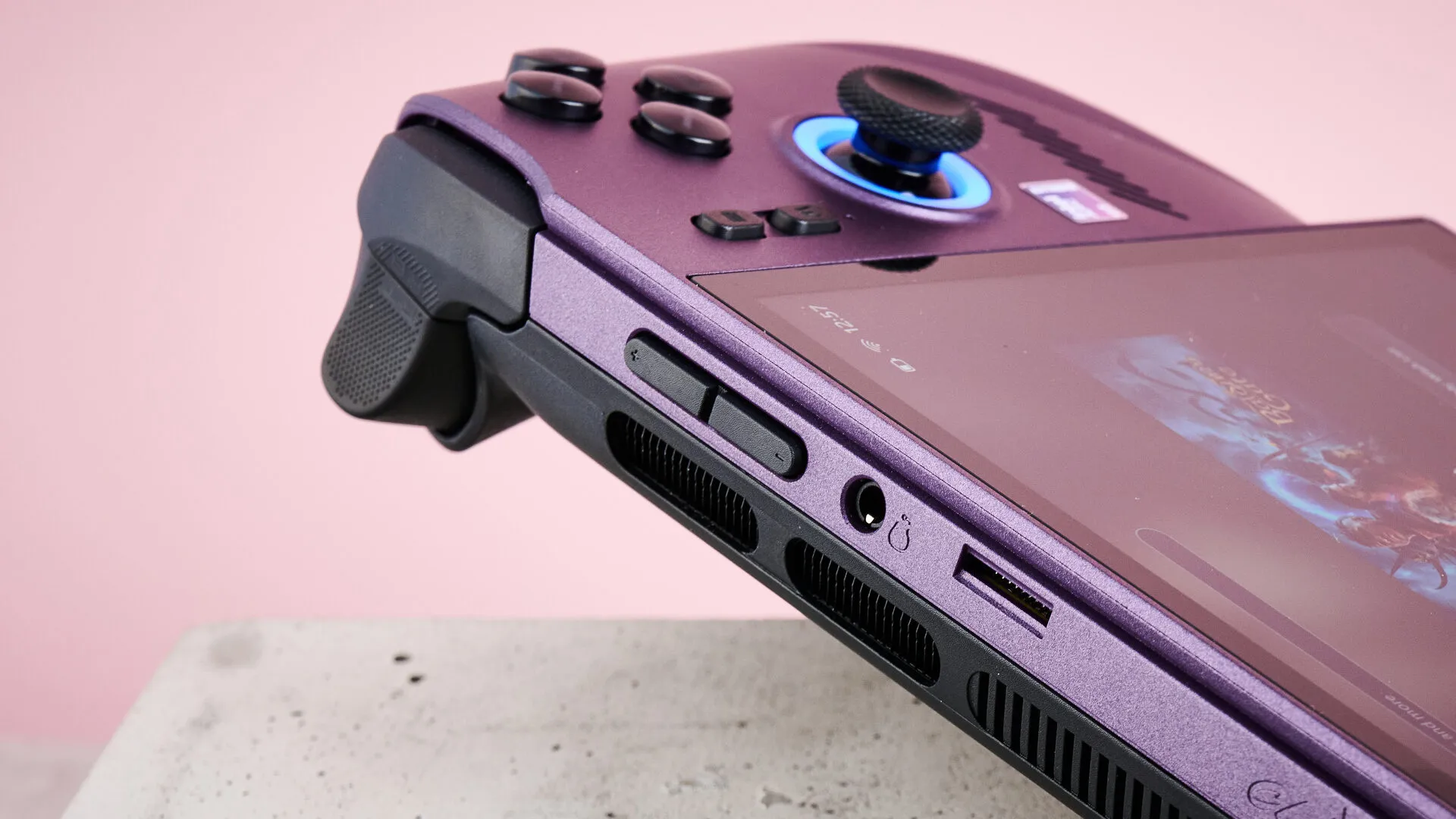
The second is that the decision depends on use. To play on the sofa what you already own on Steam, a Steam Deck still costs far less and offers a more coherent experience with its system. To carry recent games at high settings and switch between stores, the Claw is today the option with the most performance headroom, and its 8-inch, 120 Hz screen is part of the appeal, not an extra.
The third is support. It is a Windows handheld, not a closed console: the catalogue does not depend on a manufacturer deciding to keep a store alive, but performance across the generation will depend on how Intel’s drivers for its integrated graphics evolve. That is the reasonable risk of buying the first batch of a new platform; it is worth keeping in mind before paying for the top of the range.
At the previous price, the recommendation was hard to sustain outside a very specific audience. With £300 less and such a favourable performance comparison, TechRadar changed its verdict; ours is more cautious: it remains a niche handheld, but for the first time its price has an explanation that can be defended.