China will require authorization to export certain brushless motors, electronic speed controllers and drone propeller blades from November 18, 2026. The requirement depends on specific technical characteristics: it does not automatically cover every spare part or amount to a general export ban.
The change appears in Announcement 49/2026, dated October 19 and signed by the Ministry of Commerce, the General Administration of Customs and the Equipment Development Department of the Central Military Commission. Xinhua reproduces the full official text, which includes category 9A901 for these components and updates other controls on aircraft, software and technology.
Which drone motors will require a license in China
Category 9A901.a concerns brushless motors specifically designed to drive unmanned aircraft propellers. To be included, they must meet all four conditions simultaneously:
| Rated characteristic | Announcement threshold |
|---|---|
| Voltage | At least 48 V |
| Power | At least 3 kW |
| Power density | At least 3 kW/kg |
| Rotational speed | No more than 3,000 rpm |
The distinction matters when checking a specification sheet: exceeding 48 V alone is not enough. An advertised peak power figure is not sufficient either if the rated value required by the rule is unknown.
Electronic speed controllers, known as ESCs, have their own category, 9A901.b. They must be specifically designed for motors controlled under 9A901.a and simultaneously have a rated voltage of at least 48 V and a rated power of at least 3 kW. This is not an indiscriminate requirement for all ESCs sold from China.
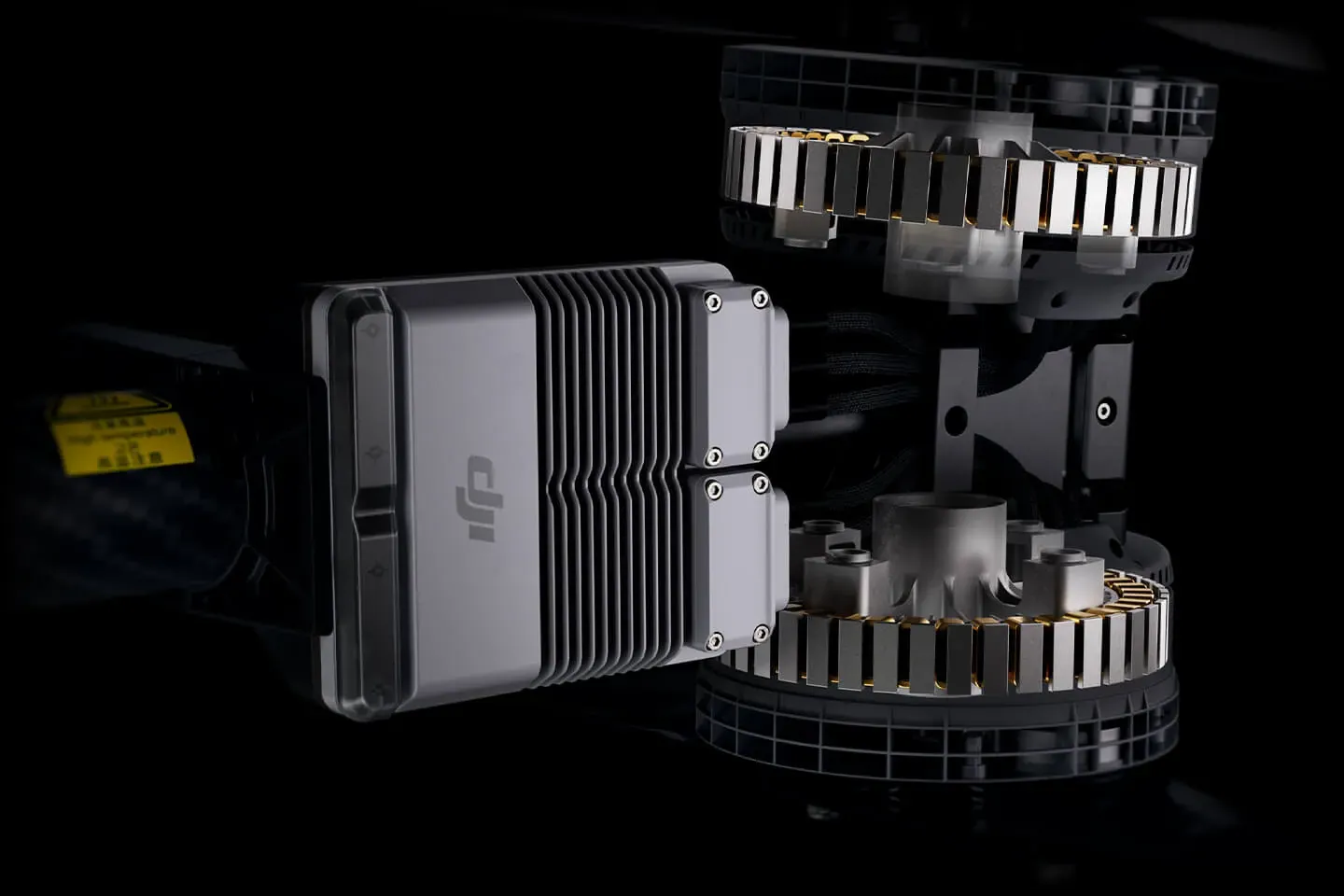
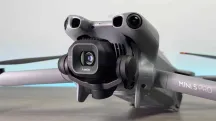
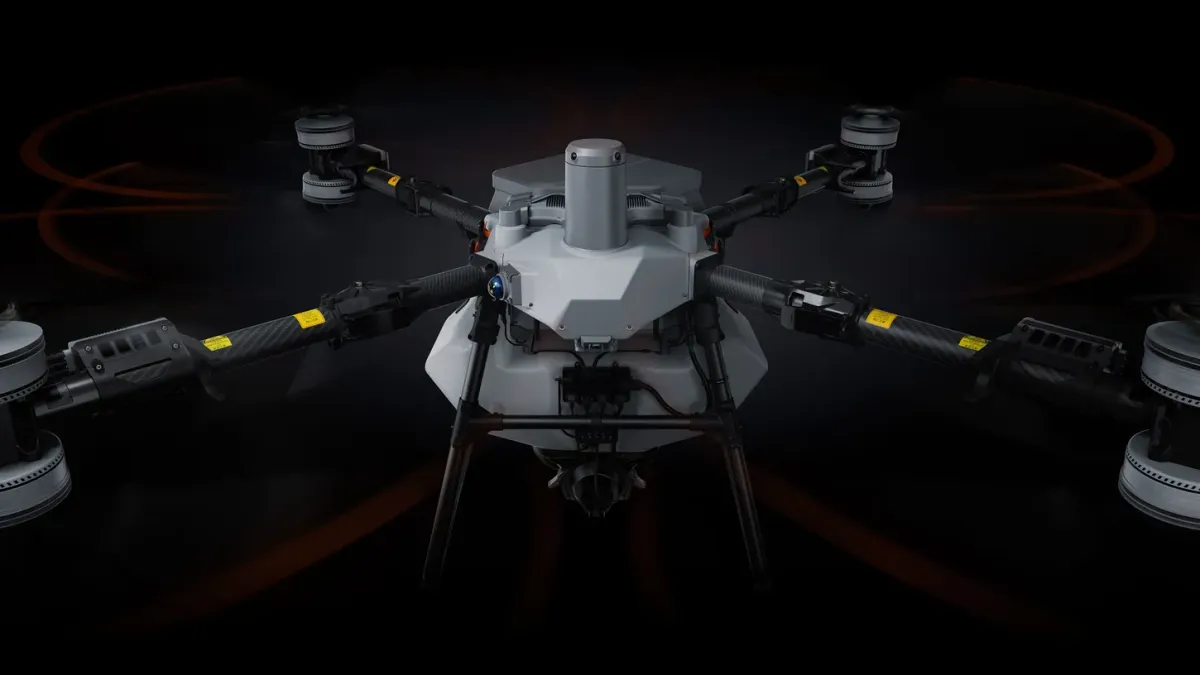
Images: DJI, published by DroneXL. The Agras T100 illustrates the type of components; its appearance does not establish that a particular model meets every threshold in the announcement.
Carbon-fiber blades have three alternative criteria
Category 9A901.c covers blades made from carbon-fiber composite material that can be used in drones and meet any of these conditions:
- For a fixed-pitch propeller whose blade structure crosses the center of rotation, the distance from that center to the tip must be at least 762 mm.
- If the fixed-pitch blade structure does not cross the center of rotation, the length from the root end face to the tip must be at least 648 mm.
- The blade root has a structure that enables variable pitch. For this alternative, the text specifies no minimum length.
These are not three cumulative requirements, unlike those for motors. The measurement point also changes: center of rotation or root. A propeller’s marketed diameter therefore cannot simply replace the dimensions required by the announcement. The carbon-fiber composite material condition applies to all three alternatives.
Export authorization, not a general ban
Exporters of covered items must apply for permission from the competent commerce authority. They must also declare the items’ characteristics to customs. The announcement additionally requires them to detail the parameters of products close to the thresholds but outside the controls and explicitly state that status; if customs questions the declaration’s accuracy, the goods will not be released while the matter is resolved.
In an official explanation also published by Xinhua on October 19, the Ministry of Commerce says it will approve applications that comply with the applicable provisions. It justifies the revision on the basis of these items’ dual civilian and military uses. That is the ministry’s position, not a guarantee of authorization for every transaction.
The revision extends beyond spare parts. For example, category 9A012.a covers aircraft controllable beyond the operator’s natural line of sight: some with endurance of three hours or more, and others with endurance from 30 minutes to less than three hours that can also take off and maintain stable, controlled flight in gusts of at least 46.3 km/h. For the latter group, the text provides a registration route before each export to obtain an export certificate. That provision should not automatically be extended to 9A901 components.
What may change for buyers and builders
For a company importing propulsion components from China, the useful check is to compare each part’s technical documentation with the corresponding category and confirm with the supplier which procedure it requires. A description such as “drone motor” is not enough by itself to determine whether it needs a license.
There is also no basis for saying that all FPV builds are affected, or that all are exempt. A 3-inch 1S FPV toothpick belongs to a different scale from the propulsion described, but classification must rely on component characteristics, not the FPV label. Falling outside 9A901 does not establish that a product is free of any other applicable controls.
The announcement sets a date and legal conditions; it does not quantify delays, price increases or shortages in Spain. Until each component’s classification and exporters’ handling of transactions are known, attributing those consequences to it would go beyond the evidence.