DJI Dock 4 Swaps Drone Battery in 25 Seconds and Returns It to the Air in Under 45
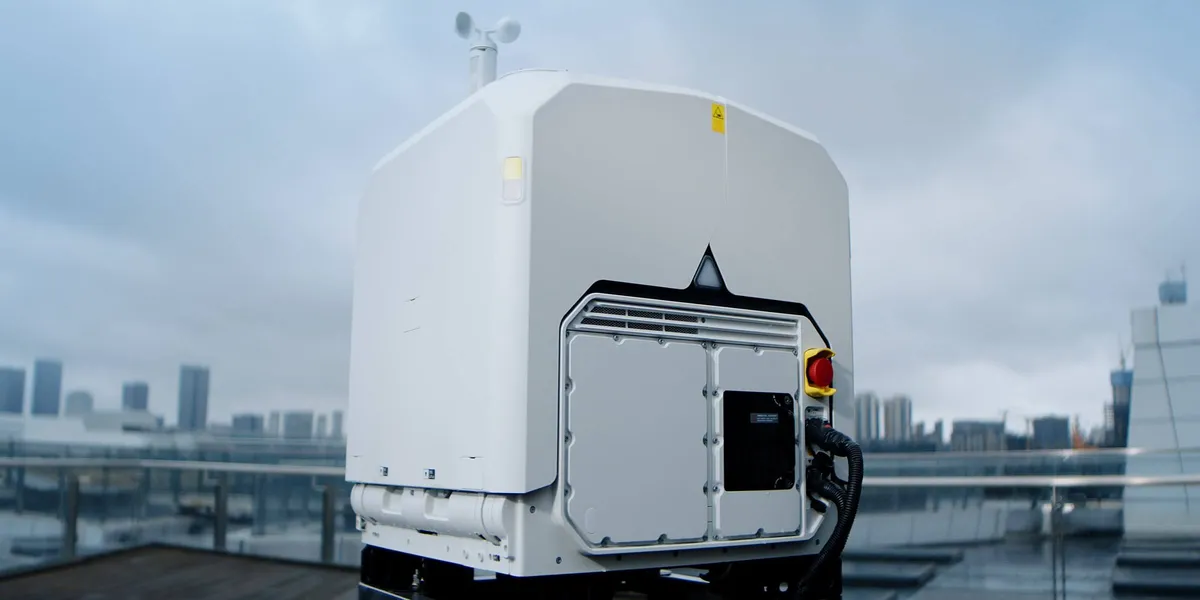
The DJI Dock 4 automatically swaps its drone battery in 25 seconds and has it back in the air in under 45 from landing. It is the brand’s first drone-in-a-box station with battery swapping, and the figure matters more than it seems: until now, a mission requiring several takeoffs required waiting around 30 minutes of recharging between flights. The company presented it on October 14, focusing it on emergency response, infrastructure inspection, and night security.
What the Dock 4 Swaps and How Long the Battery Lasts
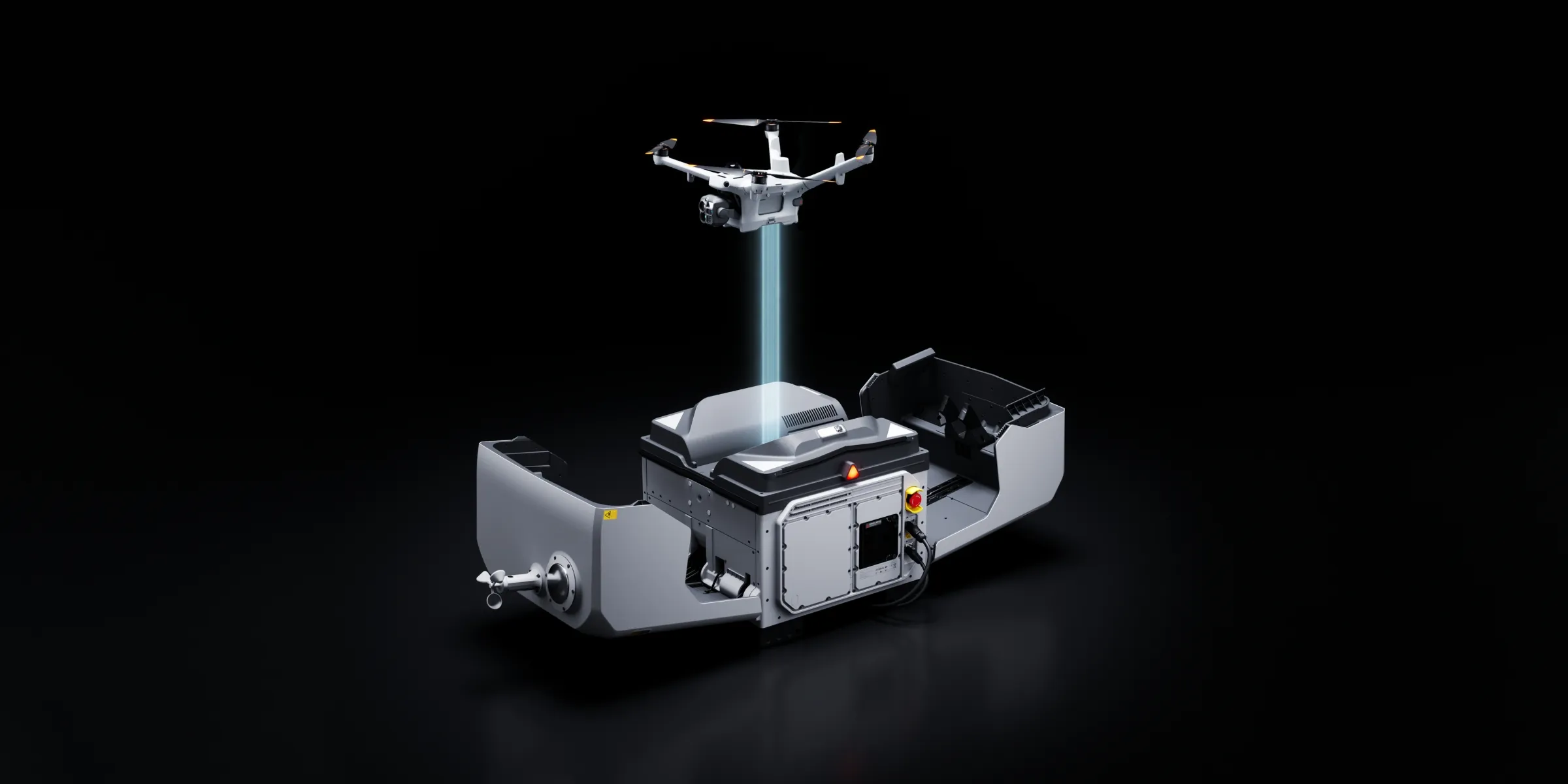
The Dock 4 charges two packs simultaneously at 925 grams each and 260 Wh, certified for 400 cycles, and takes about 27 minutes to bring each one from 15% to 95%. That time stops being an operational problem precisely because the dock does not wait for the battery to return to the drone: it swaps it. With at least two packs in the dock, the system continues swapping even if the power grid fails, although the backup energy — about 4.5 hours per pack, in sequence — only powers the dock, not recharging the batteries.
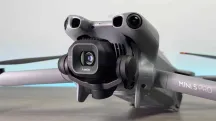
The station weighs 66 kg empty, retains the same mounting holes of 400 × 400 mm as the Dock 3 and works only with the new Matrice 5TD drone, plus requiring the DJI O4 ground station. The aircraft handles nearly an hour of straight flight (from 100% to 0% at 15 m/s without load), reaches 21 m/s in “FlyTo” tasks, and mounts three 50 MP cameras: wide-angle, medium telephoto equivalent at 70 mm, and telephoto at 252 mm (11×). It adds native thermal imaging at 1280 × 1024 — 2560 × 2048 in DJI’s UHR mode — color night vision without auxiliary focus, and a laser rangefinder up to 3,000 m.
Sensors, Payloads, and Unmanned Site Flight
The Matrice 5TD combines rotating LiDAR, mmWave radar forward, up, and down, and vision in six directions; DJI assures that it detects power lines even at night. Onboard it carries AI that recognizes 17 types of objects — cars, boats or animals, among others — and with DJI FlightHub 2 the operator can search video by text or image and receive alerts via SMS, email, or platform. The payload reaches 450 g distributed across three mounts for speaker, spotlight, and parachute, and both dock and drone are rated from −40 to 50 °C (IP56 for the dock, IP55 for the drone), with flight in winds up to 12 m/s.
Compared to the previous model, the sensor jump is clear: the Dock 3 came with the Matrice 4TD, with thermal at 640 × 512, telephoto at 168 mm and rangefinder at 1,800 m, and resistant only up to −20 °C. The real advance, however, lies in the dock’s operation, not in the drone’s spec sheet: it is what turns a drone-in-a-box station into an air first-responder service that does not depend on someone charging batteries by hand between missions. In autonomous distribution without an operator at the delivery point, Matternet pursues similar logic with its M3 platform.
Price, Availability, and the Absence of FCC Certification
DJI partners in China are already taking orders for a kit with Dock 4, Matrice 5TD and O4 station at 167,999 yuan — about $25,000 — for hardware alone, and global sales go through official DJI Enterprise distributors. There is the catch: DJI’s own spec sheet includes no FCC certification figure, and the Dock 4 is not authorized nor sold in the United States. The reason is not technical. In December 2025 the FCC included all foreign-manufactured drones and their critical components in the Covered List, and a new model cannot obtain authorization or be sold in the U.S. without the Department of Defense or the National Security Department ruling that it does not pose a risk. DJI sued the commission early this year.
There is an additional open front: a FCC proposal published in August could remove from the market foreign drones already authorized that carry LiDAR or thermal sensors, and even landing stations already certified. The docket did not have a final order by October 17, and the proposal would give sellers 180 days from its publication in the Federal Register to stop importing and commercializing the affected equipment. For a European operator, the Dock 4 is a rapid-response tool with a verifiable spec sheet; for the U.S. market, for now, it is a product with an announcement date but no regulatory path.