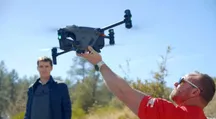
Fifteen states and Harris County, Texas, have sued the Federal Aviation Administration (FAA) to overturn the environmental review the agency uses to approve new commercial drone package delivery markets across the United States. The lawsuit was filed on Monday, September 28, before the U.S. Court of Appeals for the Second Circuit, with New York Attorney General Letitia James as counsel for the coalition. California Attorney General Rob Bonta has joined and signed the petition alongside the attorneys general of Arizona, Colorado, Delaware, Illinois, Maine, Maryland, Massachusetts, Michigan, New Mexico, Oregon, Rhode Island, Washington and Wisconsin.
The legal argument: a nationwide clearance with no ground truth
The decision the states want struck down is the clearance the FAA signed on July 28: a final Programmatic Environmental Assessment (PEA), a Finding of No Significant Impact (FONSI) and a Record of Decision. That package allows new Part 135 delivery markets to be approved on the strength of a single national study instead of repeating an environmental assessment for each market. The FAA had previously completed 23 one-off assessments between 2019 and July 2025, plus a statewide one for North Carolina.
The National Environmental Policy Act (NEPA) requires federal agencies to take a hard look at the reasonably foreseeable effects of their action. For the coalition, the PEA describes deliveries at unnamed future places and dates, with no meaningful information about the affected communities and environment and no discussion of the safety risks of a much larger rollout. “It falls far short of properly analyzing the environmental impacts,” Bonta said.
The claim the FAA answered least thoroughly, according to DroneXL’s analysis, is the fire risk from lithium batteries. The assessment dismissed hazardous materials from detailed review on the expectation that operators follow transport and disposal rules, ten months after a battery on an Amazon MK30 was ejected and burned near Tolleson, Arizona, on October 1, 2025. The letter 17 attorneys general sent in January also cited a delivery drone cutting an internet cable in Waco. The judicial margin is not wide: the Supreme Court’s unanimous ruling in Seven County Infrastructure Coalition v. Eagle County (May 2025) asks for deference to agencies on how much analysis is enough, so a brief demanding “more” starts at a disadvantage; one showing the FAA wrote nothing about a documented hazard has a path.
Seventeen attorneys general signed the January letter; 15 signed the lawsuit. Connecticut and Vermont stayed out. The venue also changed: the January text leaned on Ninth Circuit precedent — the most NEPA-friendly in the country — and four petitioners (California, Arizona, Oregon and Washington) could have filed there, but chose the Second Circuit, based in New York. The petition does not explain why. And it is worth remembering what it is: a petition for review, not a brief. The arguments will come once the FAA files the administrative record and the court sets a schedule.
What the clearance enables: the drone delivery already flying
Every Part 135 delivery approval the FAA has granted since July 28 depends on the document the states want struck down. Amazon Prime Air has been delivering since 2022 in Lockeford, California, and is seeking to expand to Tracy in the same state; this spring it needed separate authorizations for Detroit and Florida while lining up Omaha and Baton Rouge. Wing’s expansion to 270 Walmart stores and Zipline’s Seattle application run through the same finding, as do the flights of Matternet — the first delivery drone with an FAA type certificate — and Flytrex. DoorDash Air, which has already unveiled its own delivery platform, announced its Part 135 certificate on July 29, one day after the clearance.
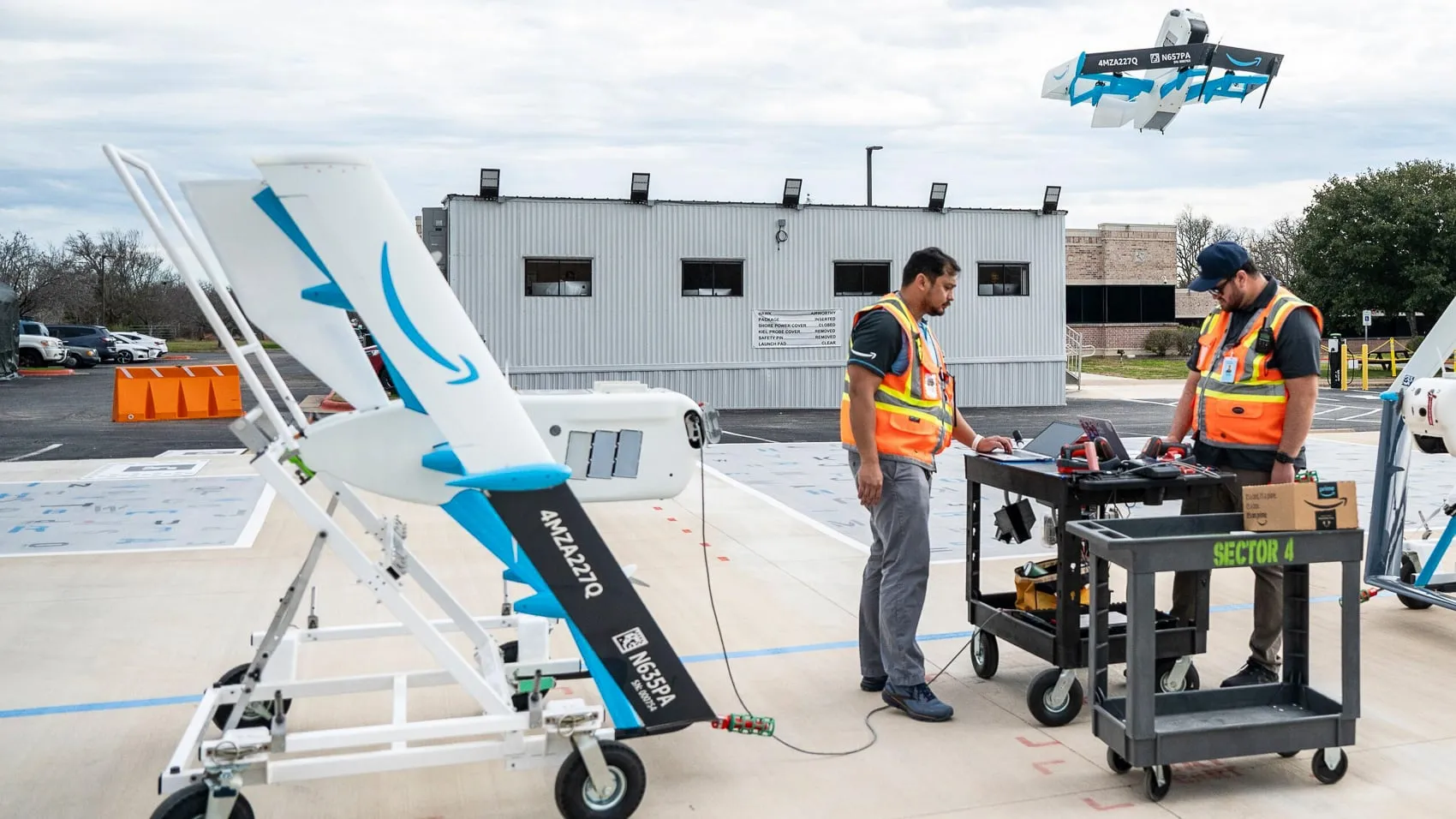
Part 108 is not at stake in this case. Package delivery stays under Part 135 until the delayed beyond-visual-line-of-sight (BVLOS) rule is finalised, and the FAA itself estimates Part 108 delivery will arrive one to two years after that.
What changes from here
The coalition has not requested a stay, so approvals continue while the court decides. If the finding were struck down, the FAA would return to the market-by-market assessments it says took six to eight months each. DroneXL’s analysis argues that the proportionate remedy for the flaw is not to overturn the whole clearance, but to require a supplemental battery analysis with enforceable mitigations.
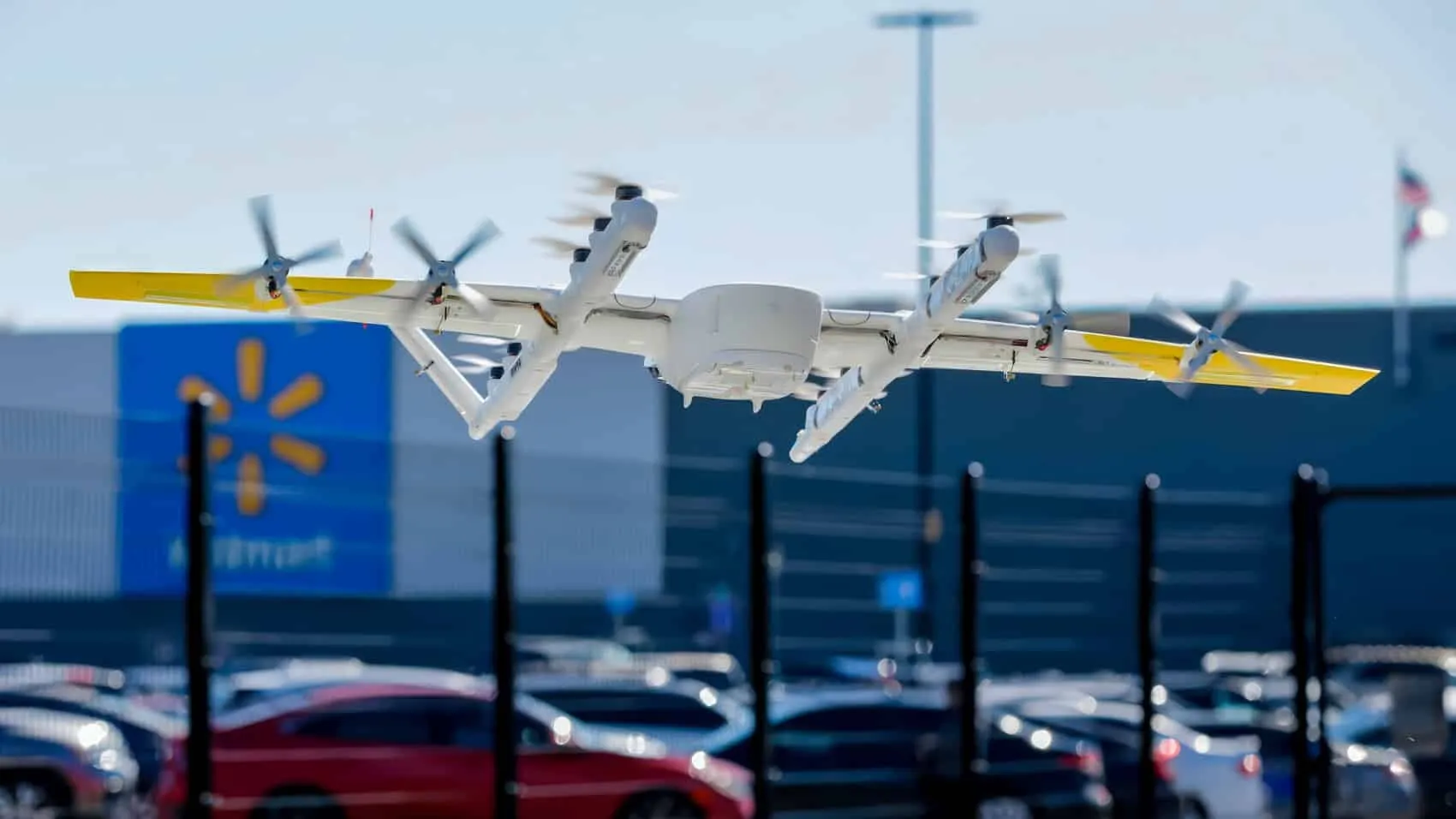
Two things are worth watching. The first is whether the coalition files a stay motion to freeze new approvals while the case proceeds. The second is the briefing schedule once the FAA lodges the record. Until then, every new hub the FAA approves carries a footnote: a court may yet rule that the signature was worth nothing.