EssilorLuxottica has unveiled the Nuance Audio Plus, the second generation of its open-ear hearing glasses for adults with perceived mild-to-moderate hearing loss. The new model keeps the approach of the first generation — hearing assistance built into ordinary eyewear — and adds three features that extend its use beyond amplifying nearby speech: roughly 10 hours of battery life, physical controls on the temples and hands-free calls for iPhone users. The glasses are available now in the United States from a recommended retail price of $829, depending on the lens configuration.
The Nuance Audio Plus introduce physical controls and longer battery life
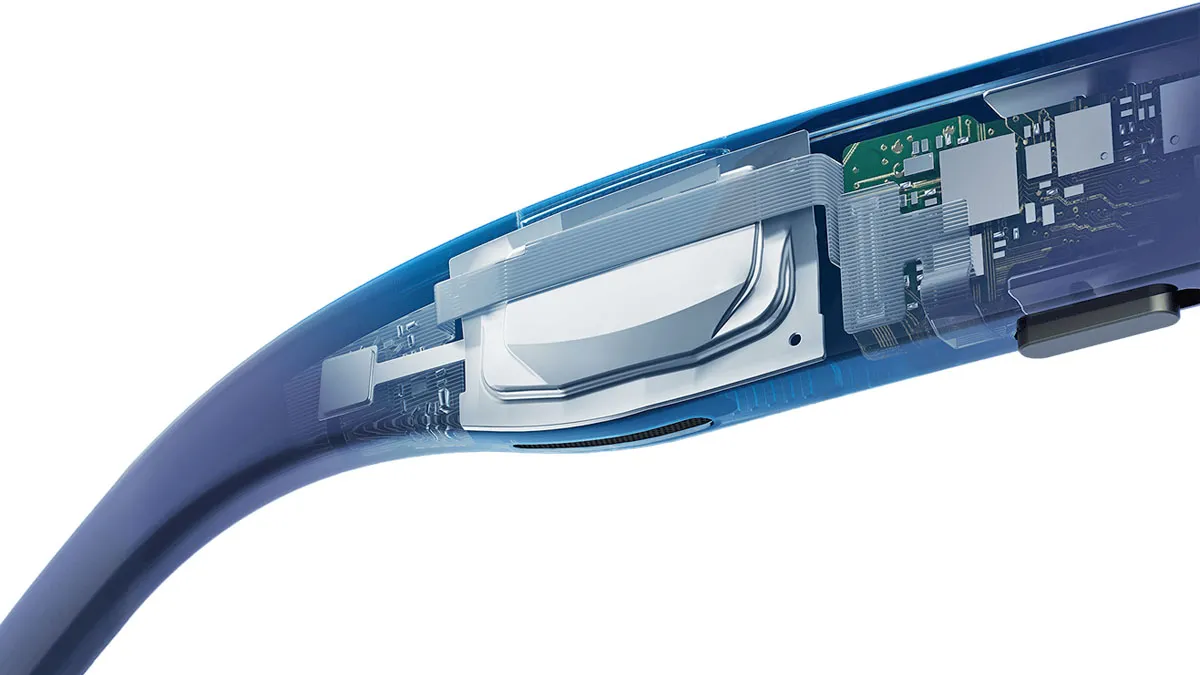
The acoustic architecture still relies on directional microphones and beamforming to reinforce conversations happening in front of the wearer, with open-ear speakers built into the temples. The ear canals remain unobstructed, one of the format’s defining traits. According to EssilorLuxottica, the new generation improves amplification, speech clarity in noisy environments and the wearer’s perception of their own voice. The announcement does not quantify those improvements or detail processing latency.
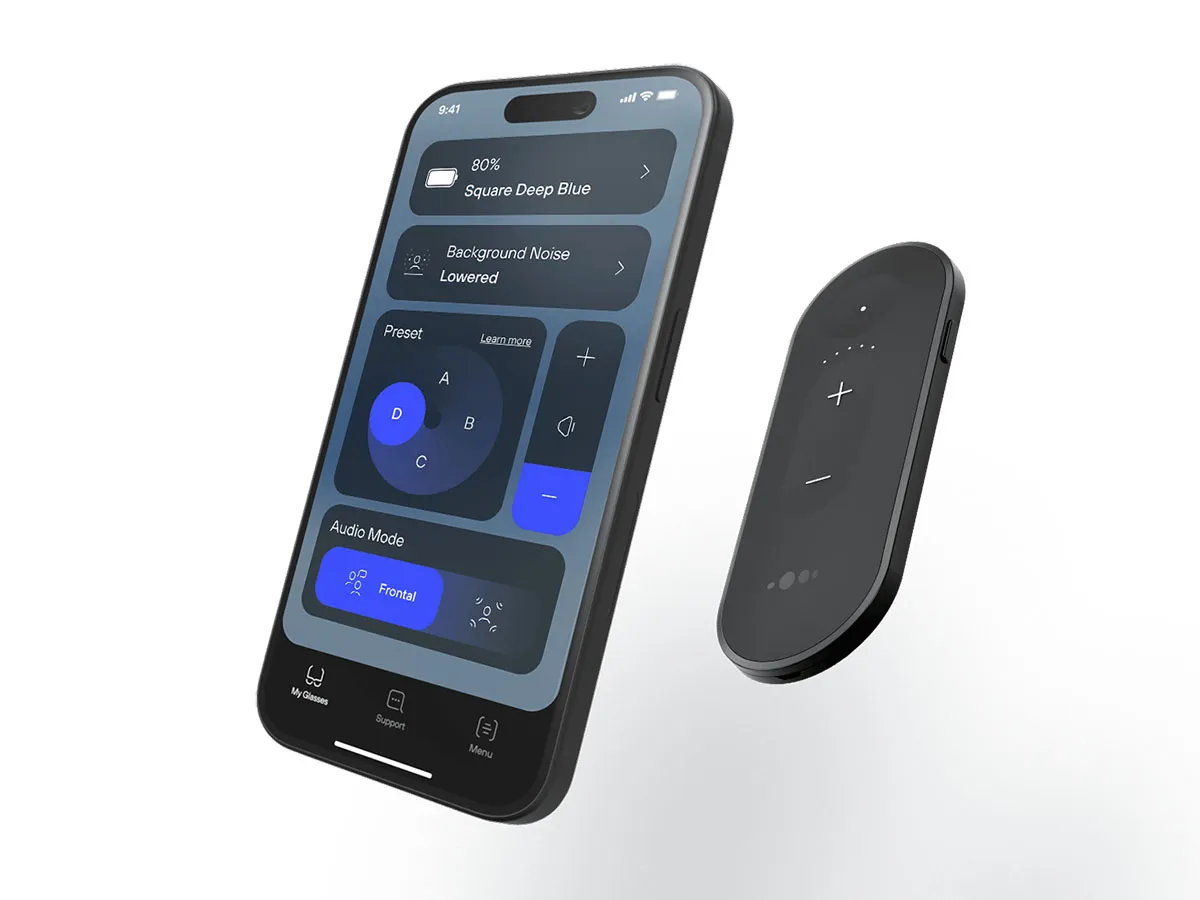
Among the day-to-day changes, the physical controls stand out: a power switch and volume buttons on the temples give direct access to the most-used functions without reaching for a phone. The company explains that, with the switch left on, folding and unfolding the arms turns the glasses off and on. The remote control remains available as an optional accessory, and battery life is specified at around 10 hours under average conditions — a manufacturer estimate that will vary with use. The standard package includes a charging pad and a USB-C cable.
Hands-free calls, for now only with iPhone
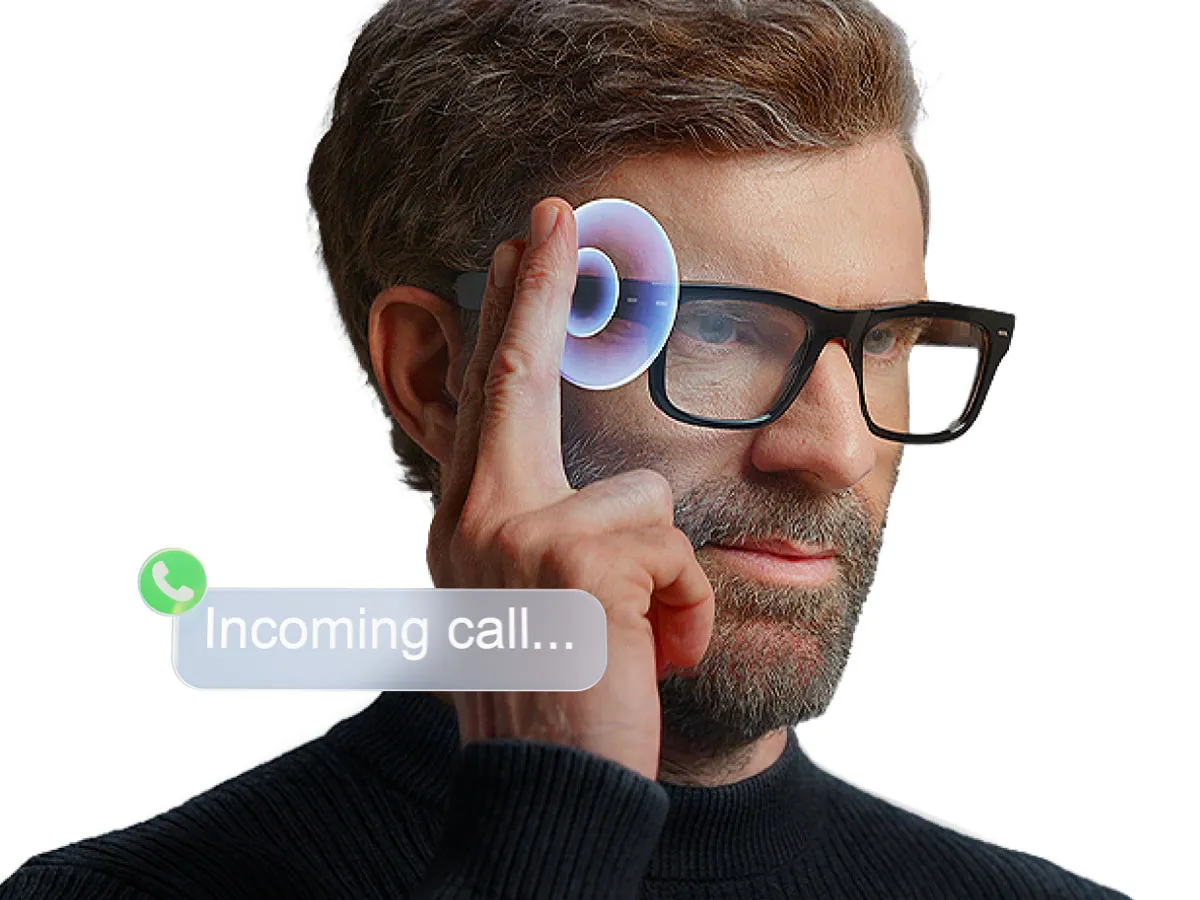
Calling without touching the phone is the most striking addition for a product focused on hearing. Wearers can answer or end a call with a double tap on the frame. The feature requires a compatible iPhone running iOS 16 or later, and EssilorLuxottica identifies the Nuance Audio Plus as an MFi-certified device. It is worth separating the two: that calling capability has a specific platform requirement that does not affect the hearing-assistance functions, which work regardless of the phone.
Listening modes and adjustments from the app
Users choose between two listening modes in the Nuance Audio App. “Frontal” focuses on face-to-face conversations, while “All-Around” amplifies surrounding sounds. These are joined by four preconfigured amplification settings, labelled A through D, three levels of background-noise reduction and five amplification volume levels. Together they let users adapt the experience to very different settings, from a meal in a restaurant to a walk down the street.
Frames, prices and availability
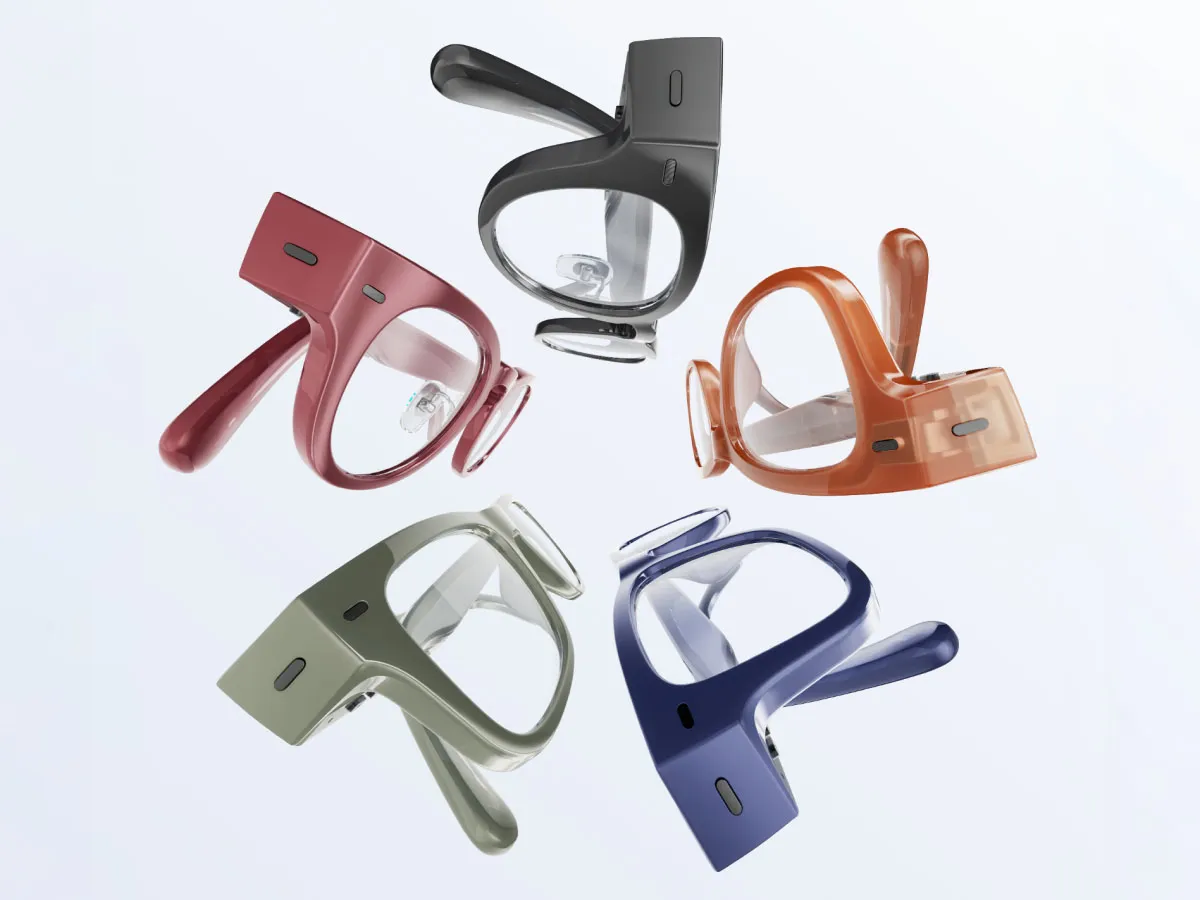
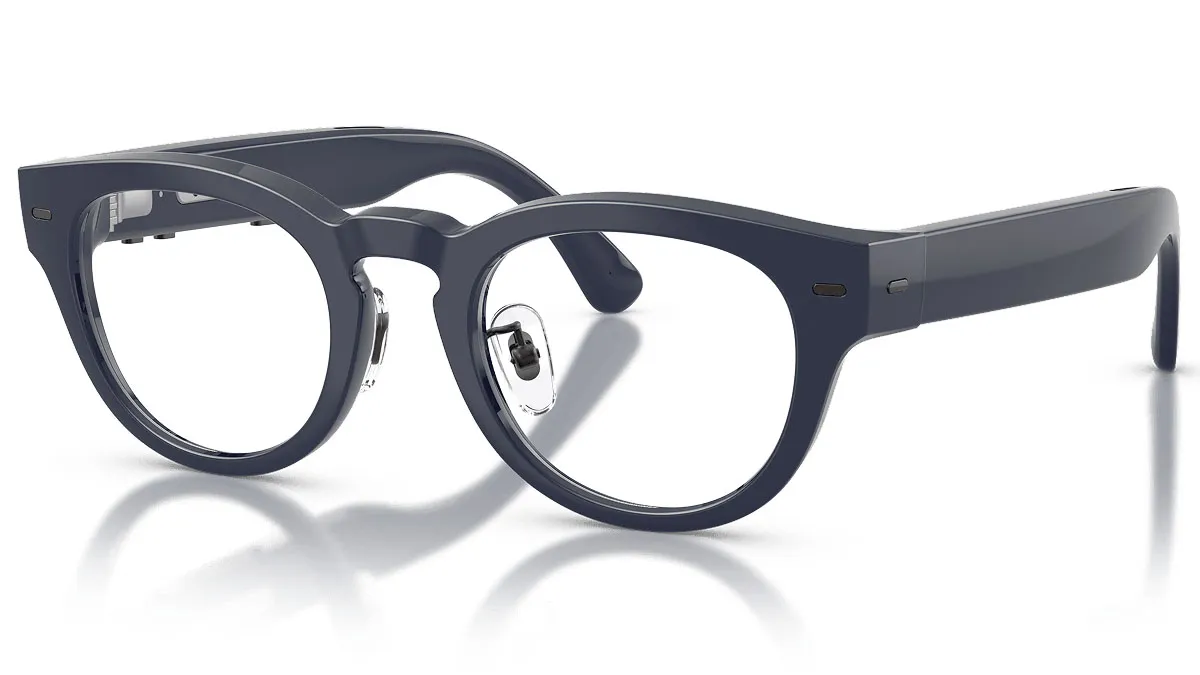
The expanded collection includes three frames — Square 53, Panthos 48 and Upturn 52 — with five colours across the range: Shiny Black, Shiny Burgundy, Deep Blue, Amber and Olive Green. Selected styles include adjustable nose pads, and the glasses can be fitted with optical lenses tailored to the wearer’s prescription, including Transitions photochromic lenses.
EssilorLuxottica describes the Nuance Audio Plus as FDA-cleared for adults with perceived mild-to-moderate hearing loss. Distribution remains central to its strategy: they are sold through authorised optical and hearing-care professionals in the United States, with online sales in selected countries. The original model, the Nuance Audio Glasses, remains in the portfolio, so the company now offers more options in features, styles and prices.
Why it matters
The proposal fits a trend moving in two directions at once. On one hand, over-the-counter hearing aids have made inroads into the consumer market, and general-purpose audio devices increasingly take on hearing-assistance duties: it is the same ground Meta covered with its FDA-cleared hearing enhancement for its smart glasses, and that other makers explore with camera-free audio glasses. On the other, EssilorLuxottica leans on its optical network to sell them as a natural product at the neighbourhood optician, rather than as a medical device.
Stefano Genco, Global Head of Nuance Audio, says in the announcement: “The response to Nuance Audio Glasses has been extremely positive, confirming that consumers are looking for a more natural and desirable way to access hearing support.” The company says its customers are, on average, five years younger than those of traditional hearing aids, and that two out of three buyers had never explored such devices before.
One detail the announcement does not give remains unconfirmed: how much speech clarity improves over the previous generation and what latency the audio is processed at — two decisive figures in a product where a perceptible delay ruins the experience. Until independent testing exists, the acoustic improvements are best treated as the manufacturer’s claims.