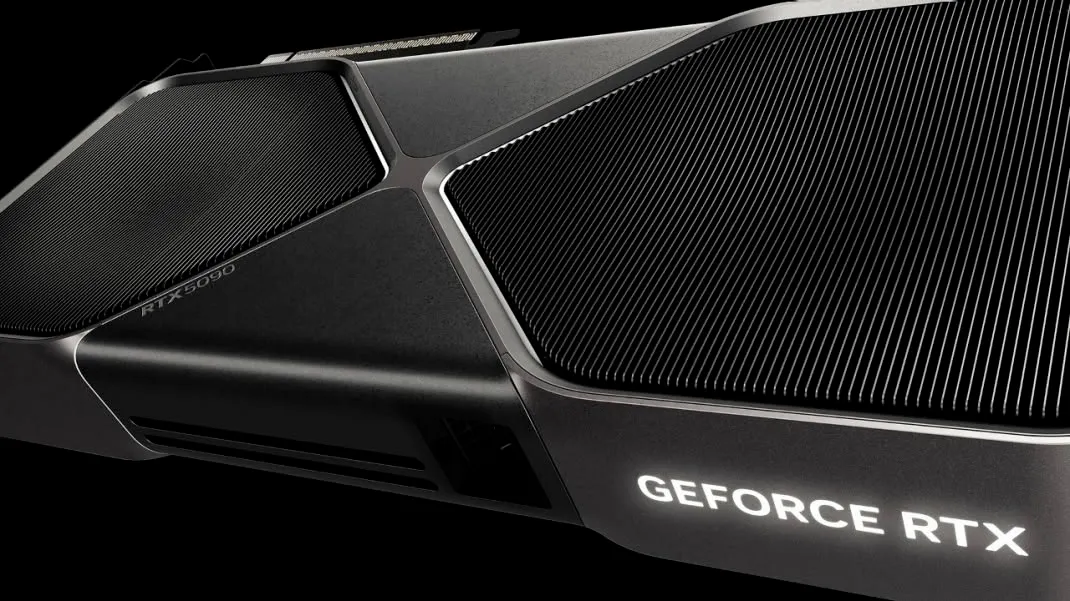
A report from Taiwanese outlet BenchLife claims that NVIDIA is working on a GeForce RTX 5080 with 24 GB of GDDR7 for the first quarter of 2027, replacing the current 16 GB model. The information, gathered by TechPowerUp, has not been confirmed by NVIDIA, so it should be read as what it is: a supply chain rumor, not an announcement. Assemblers, according to the same source, have still not received development material for that card.
What the Report Says About the RTX 5080 With 24 GB
According to BenchLife, the RTX 5080 with 24 GB would arrive in the first quarter of 2027 and replace the 16 GB version. For the buyer, the data that matters is memory: it’s an additional 8 GB of VRAM within the same product tier, which weighs heavily at 4K resolution with ray tracing or path tracing enabled, where capacity and bandwidth become the limiting factor before frames per second.

One doubt remains that the report does not resolve: whether the RTX 5080 with 24 GB and the RTX 5080 SUPER, which has been rumored for months, are the same card or two different products. It is not a minor nuance. One thing is a card with more VRAM and the same silicon, and another very different thing is a model with more shader cores and a wider bus; the difference translates directly into performance per watt and price per frame. Regarding the launch window, the first quarter would point to CES in January as a likely scenario, although the report itself admits it as speculation.
Assemblers Still in the Dark
The point that most conditions the viability of the launch is that of the assemblers. According to the report, they have not received development material —neither silicon for samples nor documentation— and only been verbally informed that the card “is coming soon”. The contrast with what happened months ago is notable: those same partners had RTX 50 SUPER silicon in hand before GDDR7 pricing stalled that launch.
Without material on the table, the date handled by BenchLife is, for now, just an intention. A partner needs time to design the PCB, validate cooling and power delivery, and manufacture stock; none of that starts without specifications. It is the same dynamic already seen with the RTX 5090 shortage, which disappeared from online commerce in the United States and drove up resale prices.
The report also adds context regarding the silicon: NVIDIA would be retiring GB202 chips from the RTX 5090 to allocate them to more profitable professional cards, such as the RTX PRO 6000 or the recent RTX PRO 5500. It would not be an end-of-life move, but a reassignment toward AI. That pressure on manufacturing capacity and GDDR7 is precisely the backdrop for any plan for a higher-memory 5080.
What Changes for the Buyer
Nothing, for now, and that is the important part. While there is no NVIDIA confirmation or material in assemblers’ hands, there is no reliable date or price. And price is the uncomfortable piece: with GDDR7 priced up and manufacturing capacity oriented toward AI, a hypothetical RTX 5080 with 24 GB would hardly come below the current 5080, whose street prices have already moved upward.
For those gaming at 1440p, the extra VRAM won’t change much; the jump would be noticeable at 4K with ray tracing, where 16 GB starts to fall short in more demanding titles. The real alternative is not a previous generation, but waiting to see what happens with the RTX 60 roadmap, which rumors also place in 2027 and current tier prices. Until then, the sensible recommendation remains buying the card that covers today’s resolution and settings, not the one promising a leak.