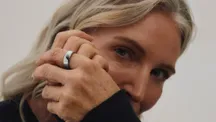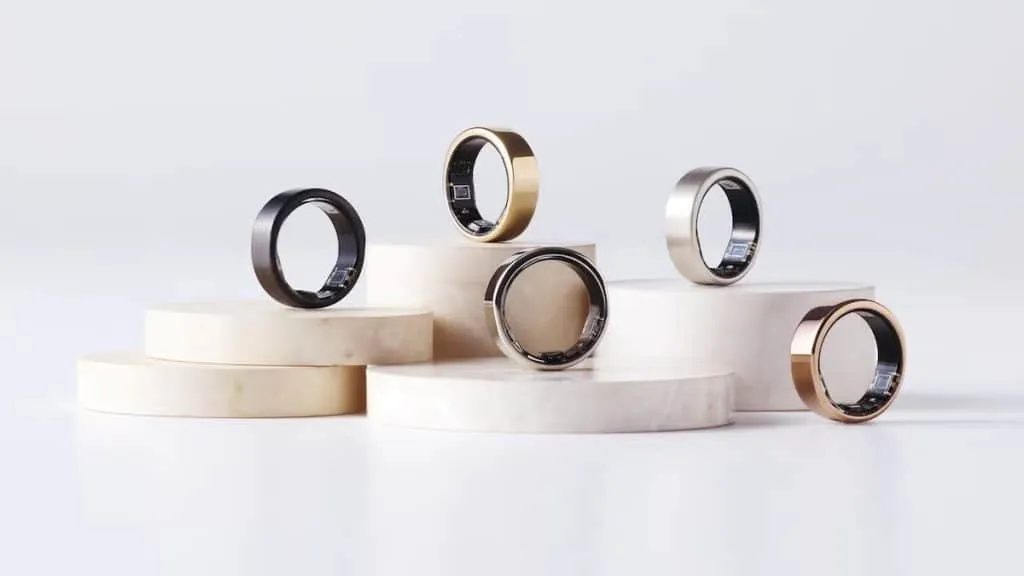
There is a Japanese smart ring brand that until now barely made itself known outside its country, and has just decided it is time to try. SOXAI has opened the Ring X campaign on Kickstarter, its thinnest model, and in a few days already surpassed $750,000 in funding. It is not a project born from nothing: the company has been manufacturing rings since 2022, says it accumulates around 80,000 users, and its technology has even appeared in third-party products, such as Sharp’s Karada Mate Ring.
The uncomfortable question in a ring that promises to be the thinnest on the market is whether that thinness comes at the cost of less battery or fewer data points. On paper, SOXAI claims it does not.
A narrow ring without sacrificing battery life
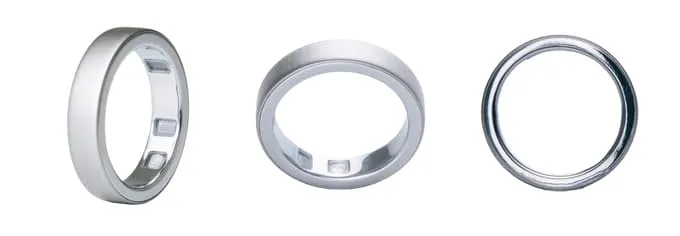
The selling point of the product is the band thickness: 5.19mm wide, a figure the company presents as the thinnest on the market among rings with vital sign tracking. The finish measures 2.6mm in thickness, uses a titanium alloy, resists water up to 100 meters and comes in three finishes: brushed silver, matte black, and gold.
What stands out is not so much the record as the autonomy that accompanies that size. SOXAI announces up to 10 days between charges, a figure that plays in the same league as quite a bit more voluminous rings. It should be read with nuances, because that maximum corresponds to large US sizes, from 10 to 13; small versions will offer less endurance. The brand’s own comparison includes another ring of 5.2mm, barely 0.01mm wider, so the combination of size and battery is more interesting than the record label.
Known sensors and subscription-free app
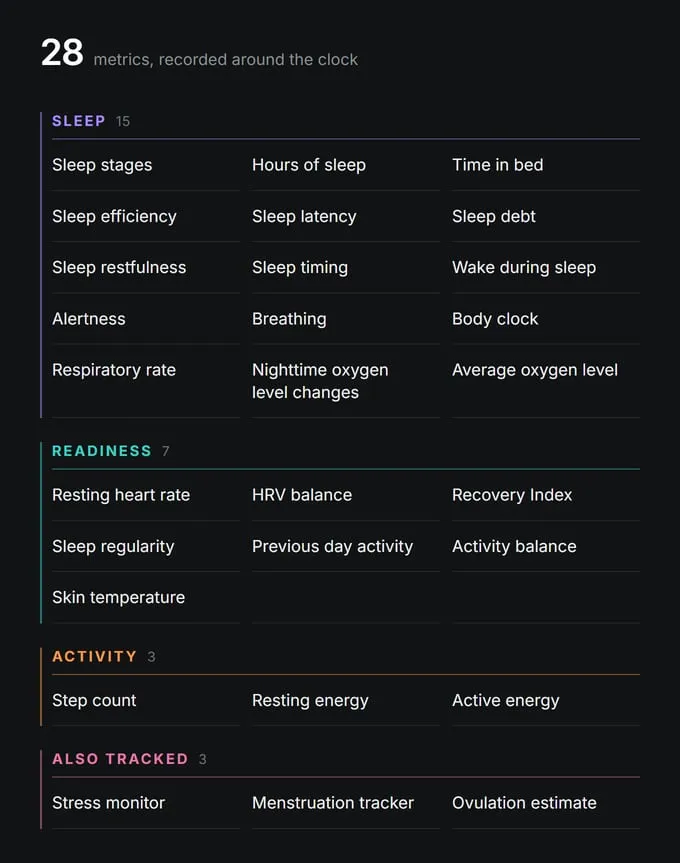
In the measurement section there are no surprises: optical sensors for heart rate, heart rate variability (HRV), and blood oxygen, along with skin temperature and motion detection. The app translates that data into sleep phases and scores, activity, stress information, chronobiological type, and apnea trend tracking.
The detail that may weigh most on the purchase decision is in the business model. SOXAI assures there is no mandatory subscription and that all app functions, including those arriving in future updates, will remain free. It is a stance closer to RingConn than to Oura, which has built much of its proposition around a monthly fee.
Why the international leap of the SOXAI Ring X matters
Beyond the product, the relevant move is that SOXAI wants to sell outside Japan. The campaign opened on October 2 and ends on October 10, with early bird contributions from around $279, standard reservations around $319, and a future selling price the company places at $399, although it has not yet been sold at that price.
One must brace for patience: shipments are scheduled between May and July 2027, and sizing kits should arrive at backers in December 2026. The company claims to already have a functional prototype, but the final design validation and production tests still need to be completed.
International availability is not closed either. According to the campaign’s FAQ, SOXAI plans to obtain the necessary certifications for the United States, United Kingdom, the European Union, Canada, and Australia, but not all are in order yet. Customers from non-supported regions will have their money refunded instead of being sent the device.
What to look at before deciding
If you are looking for a ring for everyday use and value wearing it without noticing it on your finger, the Ring X points to a sensible proposal: thin, water-resistant, and without a monthly fee. If what you need is to buy now and have support guarantees in Spain, it is advisable to wait: deliveries go to 2027, European certifications are not closed, and not all sizes will match the advertised 10 days of battery life. And as always with sleep and health metrics, take them as guidance and not as a diagnosis: no app turns a ring into medical advice.