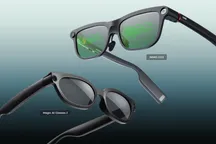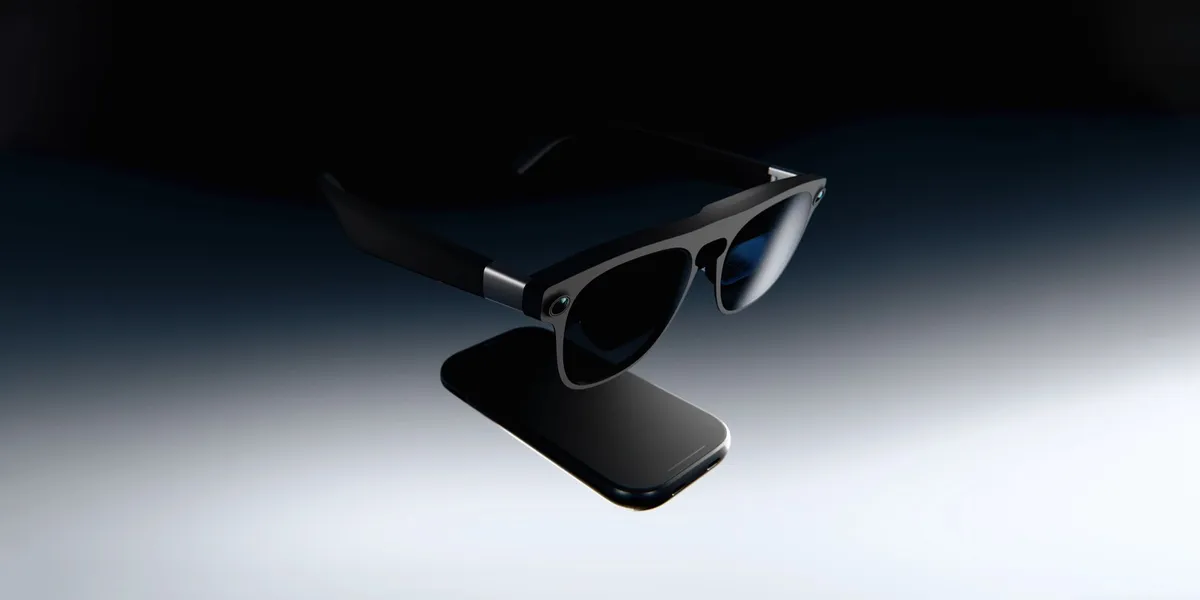
The XREAL Aura finally has a price tag, bringing with it the long-awaited change: moving away from being a screen dependent on your laptop or phone’s USB-C port to function as a standalone system.
XREAL’s first Android XR glasses start at $1,279 in the United States, well below the $1,500 ceiling the company hinted at months ago.
The proposal is what we already know from the One Pro —an image projected onto a translucent lens that blends with the real world without needing cameras— but with a key addition: an external module (a puck) that provides battery, processing power, and Android XR. That is the leap that makes the Aura something more than just a portable monitor.
What the XREAL Aura Is and Why It’s Not a Virtual Reality Headset
XREAL operates in an intermediate format that is hard to categorize. It’s not a standard VR headset because it doesn’t isolate you from your environment; nor are they the camera-equipped smart glasses we’ve seen from other manufacturers. The screen sits over a transparent lens and content overlays what is in front of you, without intermediary cameras.
The difference from the One Pro lies in the module. 9to5Google described their previous experience with XREAL glasses as limited when used solely as a USB-C device monitor, and Android XR is precisely what should correct that point: an operating system capable of running applications rather than just replicating a video signal.
Price, Versions, and Reservations
| Version | Price (US) |
|---|---|
| XREAL Aura 12 GB / 256 GB | $1,279 |
| XREAL Aura 16 GB / 512 GB | $1,499 |
There is no surcharge for choosing the medium or large size. To reserve, you need a deposit of $199 called Priority Deposit, which is later deducted from the final price. Reservations open this month, and XREAL expects to deliver the first batch «before the holidays», with a second one presumably at the beginning of 2027.
What Changes for the User
At $1,279, the uncomfortable question remains the same as with any expensive wearable: will you really use it? The price is competitive for what Android XR promises and comes below the announced ceiling, but value isn’t in the technical specs, but in how many hours you end up wearing them. And that’s not solved by a reservation deposit.
If you’re looking for a large screen to work or play on away from home and don’t mind depending on the module, the Aura aims to be one of the most interesting things we’ll see in glasses this year. If you were expecting glasses that go unnoticed and don’t need a puck, it’s better to wait and see what the competition does: Samsung plans to launch its own Android XR glasses in November, and that contest will decide where the category goes.