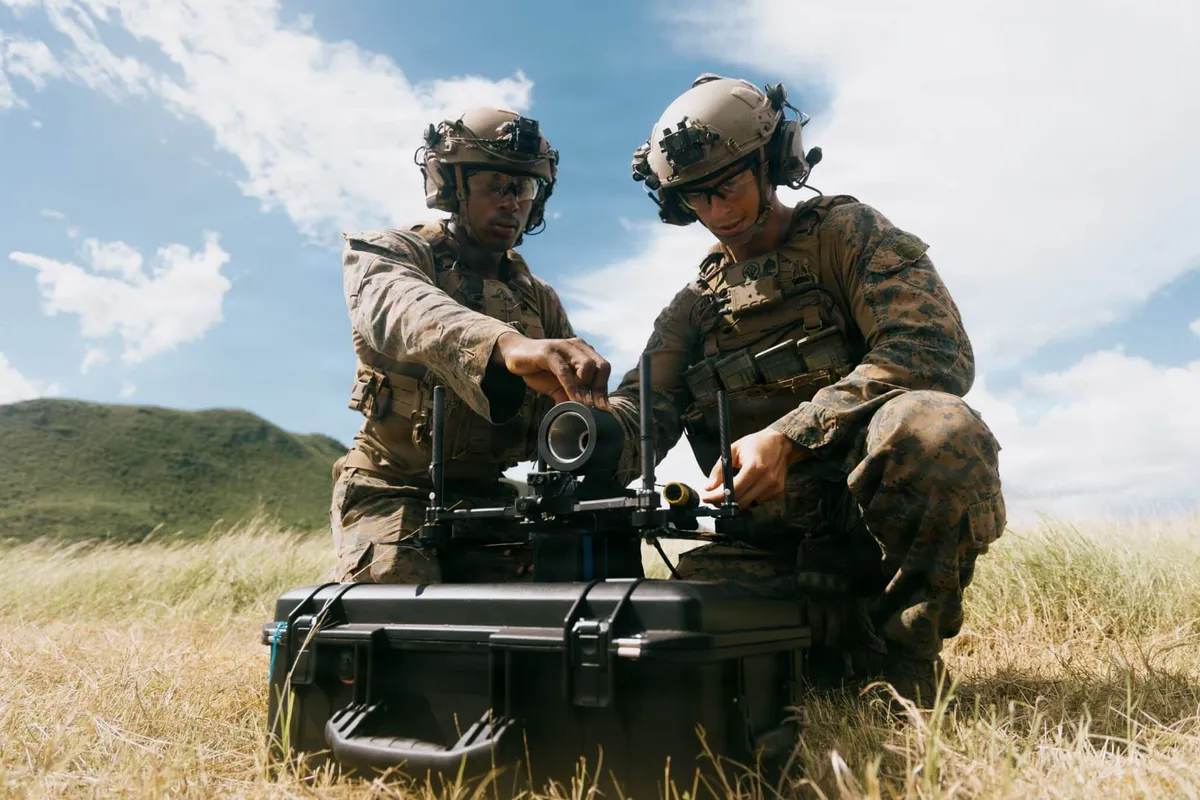
The Pentagon’s Drone Dominance Program has ordered 14,000 drones and explosive payloads from Neros Technologies through Gauntlet II, an order the Torrance, California, company values at more than $100 million. The award follows the firm’s first place in the Close Quarters Battle mission and third place in Deep Strike, both held at Fort Carson, Colorado, in August. On top of that comes a smaller one: 800 drones from the previous program, taken from competitors that missed the delivery deadline.
What Neros’s Gauntlet II order includes
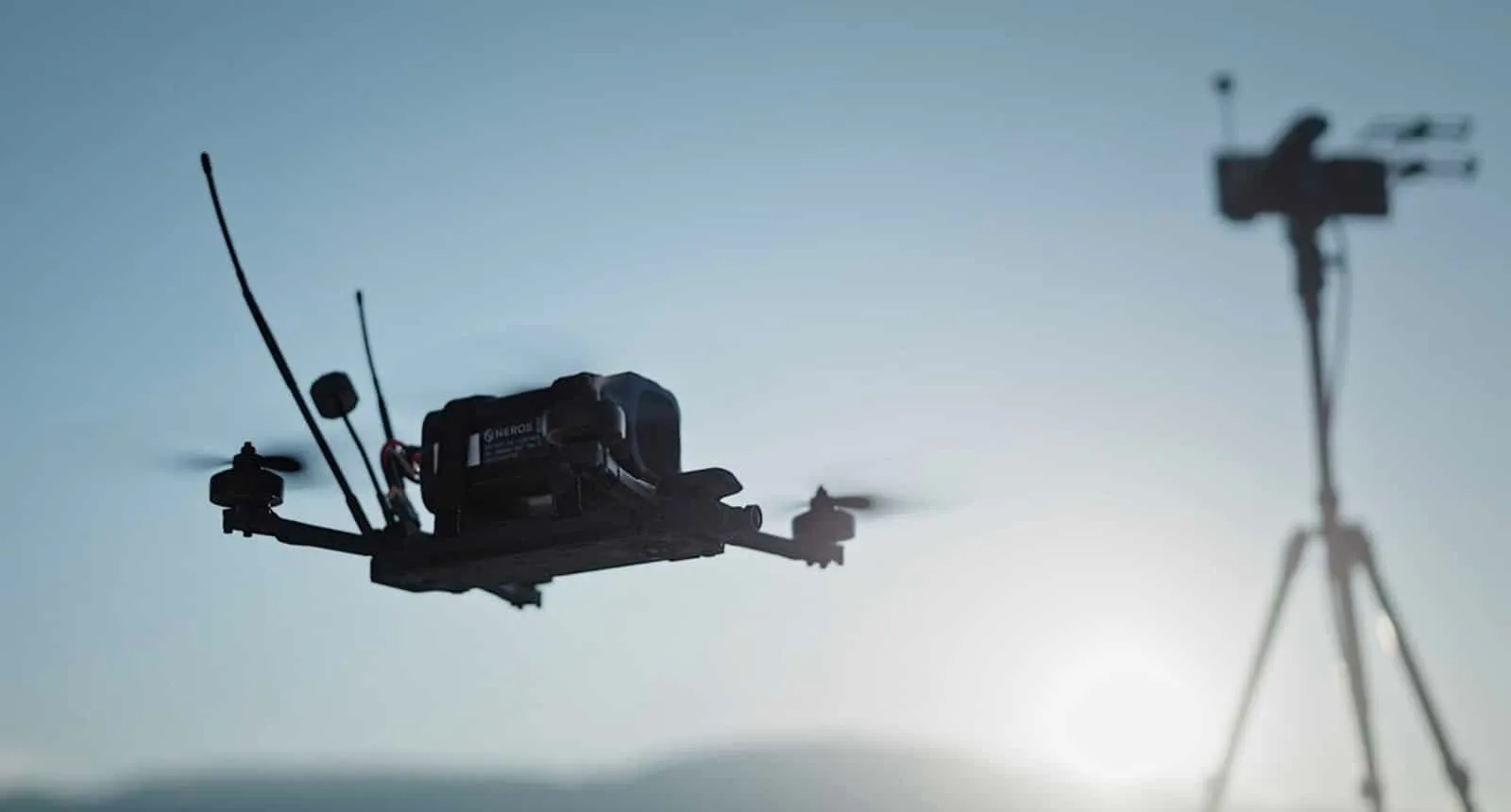
The order covers the Archer AI, a 10-inch FPV drone with terminal guidance that flies itself to the operator-selected target, and a 5-inch Archer built for urban and indoor combat. Neros does not break down how many of the 14,000 belong to each model; it only says the department prioritizes the Archer AI, the model the company unveiled in August alongside its $250 million Series C funding round.
It is also the first mass shipment of drones built to APEX (Adaptive Payload Exchange), the open standard Neros introduced so operators can swap conventional, fiber and repeater payloads in the field.
Why the total exceeds $100 million
The unit prices the program set for Gauntlet II are $3,500 and $4,500. At that rate, 14,000 drones cost between $49 million and $63 million: the gap up to $100 million sits in the explosive payloads, the only item Neros names besides the airframes. The $4,500 Deep Strike price excluded weaponization, so even if all 14,000 were Deep Strike drones, at least $37 million would fall outside the airframe’s list price. The total works out to more than $7,100 per drone, a figure the program’s own price sheet never shows.
Neros offers no breakdown. For context, Swarm Defense, fifth in Deep Strike, announced a 4,000-drone order last week with a minimum value of $25 million that included munitions and control software, or about $6,250 per unit. Tectonic Defense, which reported the 14,000 figure on September 23 before Neros confirmed it, put the order at about $70 million on drone price alone.
The program shifted its terms: when it opened Phase 3 on September 28, it raised the Deep Strike price to $5,000 and cut Close Quarters Battle to $3,000. The quantity also matches the ladder in April’s Request for Solutions, which set 8,000 drones for first place and 6,000 for third in each mission area.
The 800 drones taken from rivals that did not deliver
The order is not limited to Gauntlet II. Neros received a second Gauntlet I bonus: 800 drones taken from competitors that missed the production deadline. It is its second bonus in that phase, because it delivered and got acceptance for the 2,400 drones in its March order by July, earning a first bonus of 2,000 units. In total, it adds up to 5,200 Gauntlet I drones.
The rest of the field did not keep pace. Gauntlet I required the 11 winners to deliver half of 22,320 drones within two and a half months and the rest within four and a half. By August 25, 13,440 had arrived, around 60 percent. Only Neros, Ukrainian Defense Drones and Griffon Aerospace had completed their orders, and the batches from UDD, Skycutter and ModalAI were still awaiting inspection. The shortfall is attributed to a shortage of NDAA-compliant motors, batteries, sensors and chips.
Neros does not name which competitors lost those 800 drones. Its CEO, Soren Monroe-Anderson, described the program as a test of whether companies can build good drones and “produce them in massive quantities with short notice.” The company says it is the only manufacturer with more than one Gauntlet I bonus.
What changes for US defense-drone manufacturing
Neros was building about 1,200 Archers a week in August, so a 14,000-drone order amounts to under three months of output. The Gauntlet I stragglers, by contrast, were still short of finishing March’s order in late August. To earn a Gauntlet III slot, a company must first clear the 400-drone delivery gate the program opened on Monday, in about two months.
The industry read is clear: delivery capacity weighs as much as the score in the trials. A program that hands drones from those who do not build them to one that does turns delivery into the criterion that decides who stays. For the US defense-drone maker, the bottleneck is no longer just designing a good aircraft, but securing compliant components and scaling the supply chain on time.
You can follow the sector’s news in the defense drones and industry section.