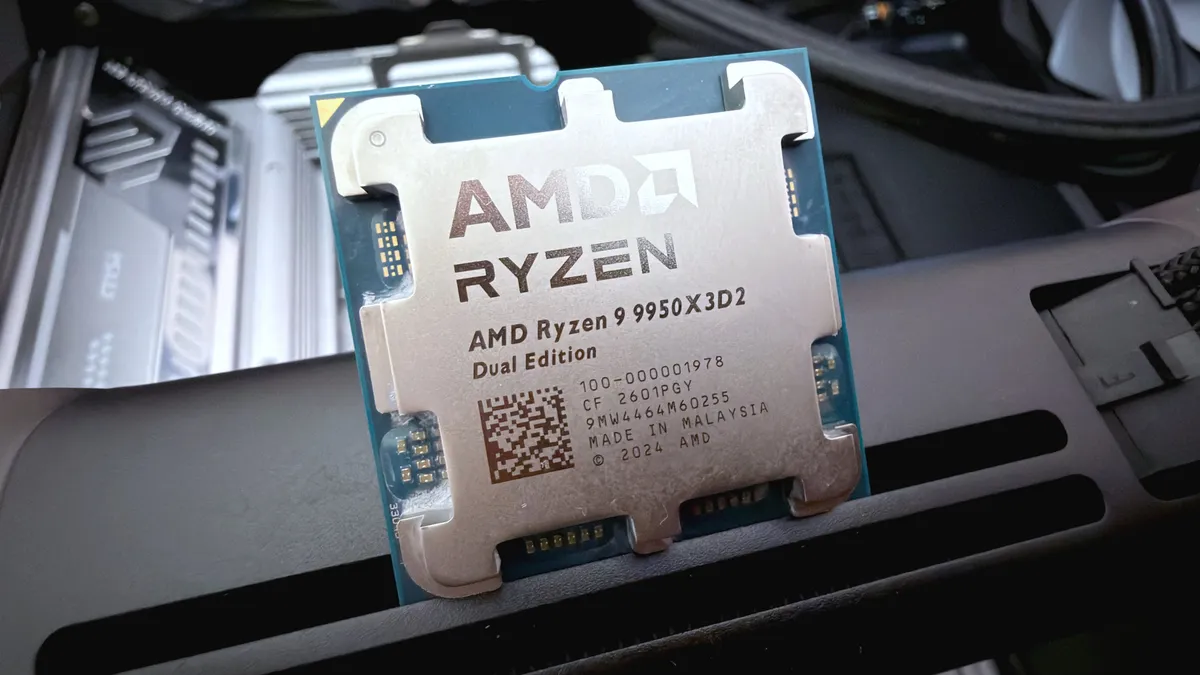
AMD has already shown the Zen 6 architecture in the server EPYC Venice chips, but the desktop Ryzen parts that will debut it — codenamed Olympic Ridge — still have no public date. In recent days two accounts of when they will reach the AM5 platform have appeared, and they do not agree: one maintains that the launch slips to the second half of 2027; the other calls both that date and the technical explanation attached to it inaccurate.
Both should be read for what they are: leaks. AMD has not announced a Zen 6 launch schedule for desktop, so there is no official date against which to measure any delay. What is useful here is not picking a winner, but separating what is confirmed from what is rumor, and what each scenario means for someone with a PC open on the bench or a purchase pending.
Zen 6 on desktop: two accounts of the same date
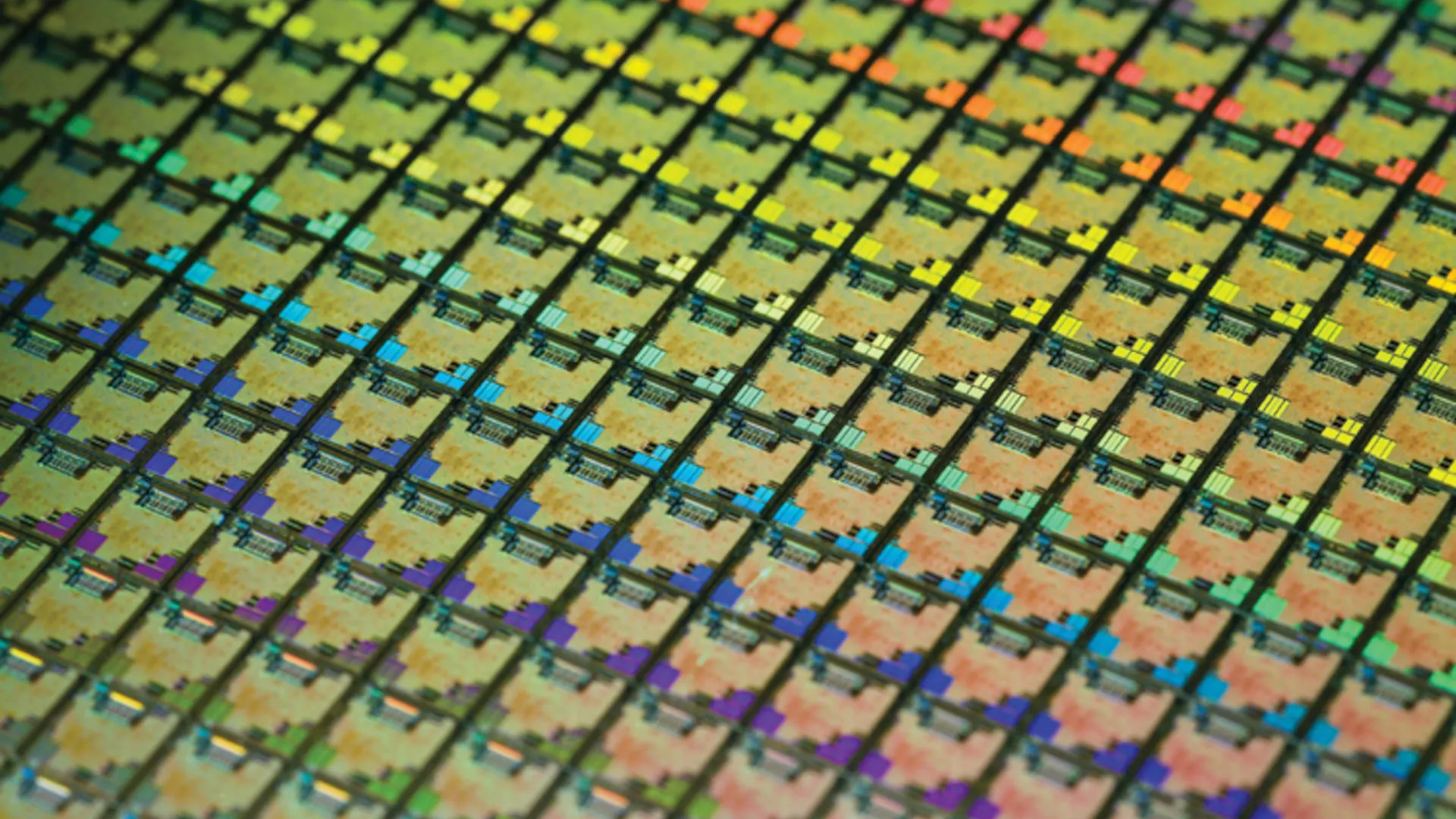
The first account comes from the Chinese Chiphell forum. A user known as zhangzhonghao claims that the CCDs of the desktop Ryzen chips have moved to TSMC’s N2X process, a 2 nm variant aimed at high clocks, and that the schedule has shifted because of that change. The post mentions Computex, and several outlets read the reference as a launch after the June trade show — that is, in the second half of 2027. Olympic Ridge had previously been taken for granted as using N2 or N2P. PC Gamer picked up the thread and pointed to a detail that fits the hypothesis: N2X does not enter production until 2027, which would explain a later window. BenchLife adds two elements from the same post: a bandwidth improvement between the CPU and the chipset on the 900 series, and AI demand as the cause of the shift.
The second account comes from the software side. 1usmus, author of Hydra and DRAM Calculator, posted on X on November 20 that the claims are not accurate: that the first Zen 6 chips on AM5 use N2X, that there is a delay until the summer, and that clocks exceed 6 GHz. His version is that N2X may be reserved for later batches aimed at high clock speeds, while the first chips would ship on N2 or N2P. He does not, however, offer a complete schedule: his rebuttal dismantles the explanation for the delay, it does not confirm a date.
| Claim | Who makes it | What backs it |
|---|---|---|
| Olympic Ridge moves to TSMC N2X | Post on Chiphell, circulated by VideoCardz | A forum message with no AMD document |
| Launch after Computex 2027 | Interpretation of that same post | An outlet’s reading, not a date written by AMD |
| N2X will not be in the first chips | 1usmus | Knowledge of the overclocking scene and Ryzen tools |
| No delay until the summer | 1usmus | Denial of the earlier version, with no alternative date |
What is confirmed and what is not
What is confirmed is the architecture, not the desktop product. AMD introduced Zen 6 in the server EPYC Venice family, and that announcement says nothing about when there will be a desktop Ryzen in stores: they are different markets, volumes and validations. The second confirmed item is the platform. Reports agree that the next desktop Ryzen chips will stay on AM5, something that also follows from the dispute itself, since both sides are arguing about chips “on AM5”.
What is confirmed on the teaser front is less than it appears. Jack Huynh, an AMD executive, posted a video on X on November 17 with the message that “the next era of computing is going to be special” and an invitation to see something at CES, whose keynote is expected on January 5. The message names no desktop processor, so the event does not settle the dispute: there may be architecture, there may be Medusa Point laptops, and there may be no date at all for Olympic Ridge.
That is why the word “delay” needs qualification. The expectation of a launch in the first half of 2027 came from leaks and industry reports, not from a public commitment by AMD. A change against that expectation is not the same as postponing an announced product, and anyone reading it as a broken promise is attributing to AMD a schedule it never gave.
On the other side of the ring the situation is different. Intel said on an earnings call that Nova Lake is “ahead of schedule”, and those CPUs will debut a new socket, the LGA 1954 that has already been seen on sale at AliExpress. If AMD’s schedule slips to the second half, the first half of 2027 would be clear for Intel in the high-end desktop, with the caveat that its platform forces a new board. The leaks about the Nova Lake-S SKUs point to a broad family, though also without a firm date.
What it means if you are about to build or upgrade
Here the dispute weighs less than the headline suggests, and for a workshop reason: AM5 continuity changes the cost of waiting entirely. If you already have an AM5 board, a DDR5 kit and a cooler that handles the current generation, a Zen 6 Ryzen is in theory a BIOS and CPU upgrade, not a new machine. What you need to check before taking that step is not the date in the rumor, but whether your board maker publishes an AGESA with support for the new silicon and whether its VRM is sized for what is coming.
That last point deserves attention. If the N2X rumor has any truth to it, the practical consequence would be a chip geared more toward frequency than efficiency, and that translates into watts and heat inside the case. A low-end board with tight power stages and a 120 mm cooler can fall short not through incompatibility, but through temperature and noise. In the opposite scenario — first chips on N2 or N2P — the thermal jump would be more moderate, but it is still a new generation: the same case that is comfortable today can end up at its limit with a twelve-core CCD, as the leaks about the architecture suggest.
And there is the alternative that does not depend on any leak. A Ryzen 7 9800X3D on AM5, with eight cores and no cooler in the box, is today the reference option for gaming and does not need to wait for anyone: just a board with an up-to-date BIOS and a decent air tower. Comparing its performance with a Zen 6 without samples in hand would be speculation, which is why reasonable buying decisions are made on what can already be measured.
The advice, then, is the usual one before a generation change: if your current machine does what you need, update the BIOS and wait without buying anything; if it falls short now, buy the platform that exists and do not lock up the budget for a year over a date that not even the leakers agree on. When AMD publishes specifications and prices, the question will resolve itself; until then, this is a discussion between sources, not an announcement.