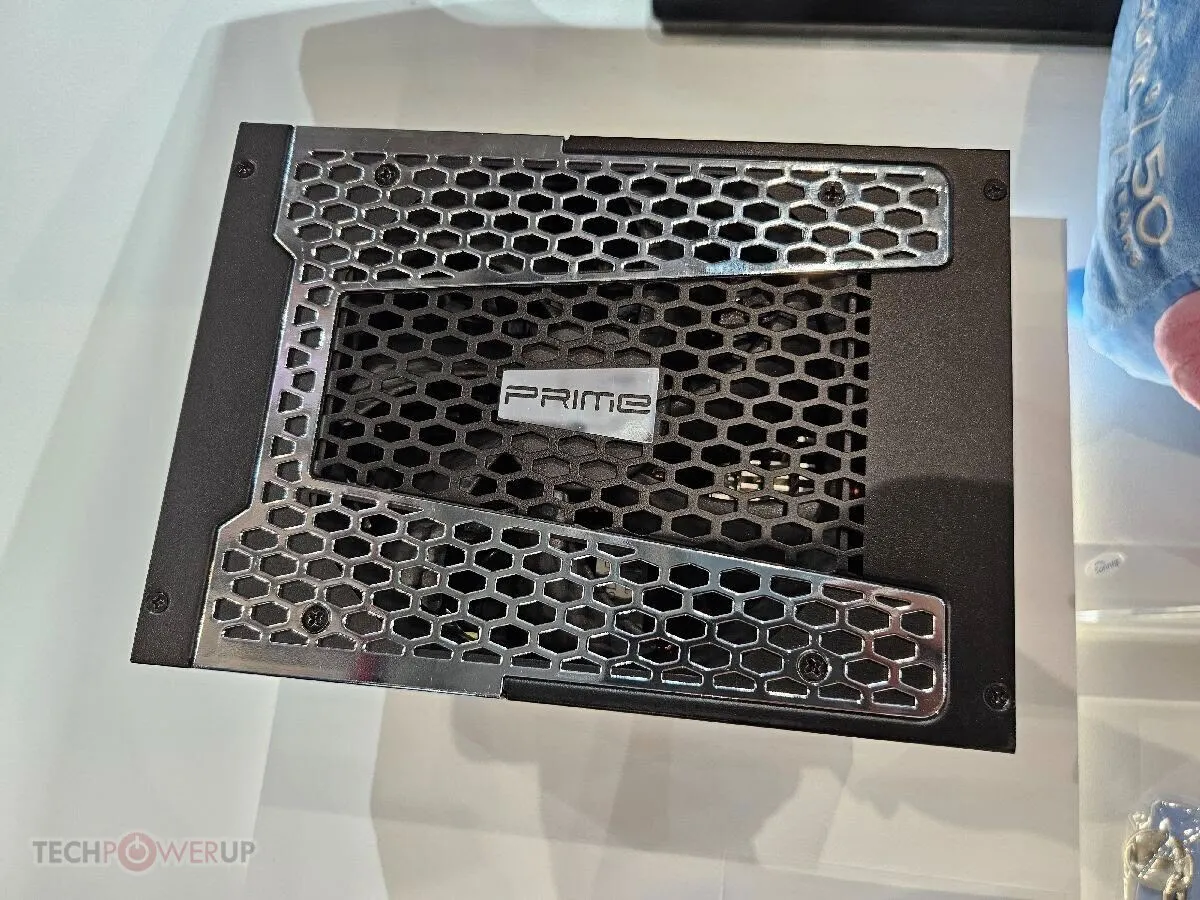
Seasonic has announced on its official Weibo account that the new power supply is about to arrive, and it accompanied the post with an image of NVIDIA’s Supermicro GB300 workstation. There is no price or release date, but the announcement confirms what the company had already been showing at trade shows: a 3,200 W unit meant to feed several professional-grade GPUs in the same machine, not a desktop system.
The spec sheet is short and very concrete. Six 12V-2x6 connectors, 80 Plus Platinum and Cybenetics Platinum certification, and a single +12 V rail that, in the version shown in 2025, was listed at 266.7 A. Translated to the workbench: six native GPU cables, with no adapters in between, which is exactly where multi-card builds break.
The PX-3200: six connectors that do not add up to what they seem
Each 12V-2x6 carries up to 600 W by specification, so six connectors would give 3,600 W on paper. The unit is capped at 3,200 W, so the real sum never reaches that ceiling: the connectors are there to spread load, not to draw the maximum from all of them at once. That headroom is what makes it possible to feed several GPUs without resorting to splices or distribution boards, which is precisely what the industry has spent two years trying to avoid at the cost of melted connectors.
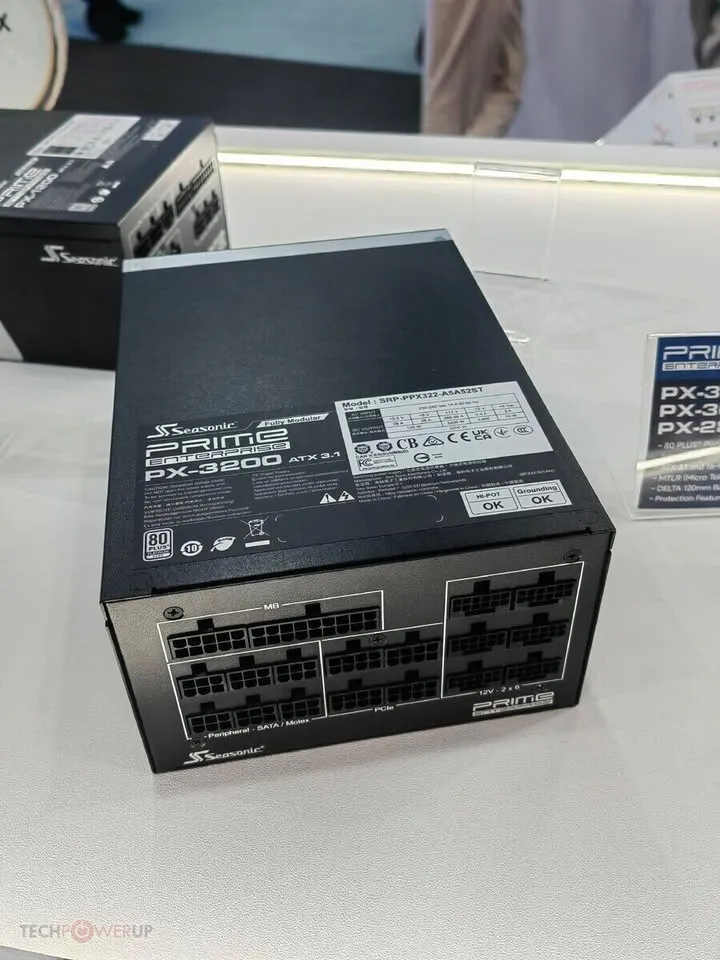
The rest of the package points in the same direction. The unit claims ATX 3.1 and PCIe 5.1, with overcurrent, overvoltage, short-circuit and temperature protections, and a 120 mm Delta fan. El Chapuzas Informático adds that it includes EDPP (Enhanced Dynamic Power Protection), designed to absorb the sudden consumption spikes of current GPUs, the millisecond margin in which a card goes from idle to its limit. In a server chassis that spike goes unnoticed; in a workstation with four GPUs, it does not.
From Computex 2025 to the AI workstation
The PX-3200 is not new. Seasonic showed it at Computex 2025 with 266.7 A on the +12 V rail, up to 94% efficiency under typical loads and a 12-year warranty. At Computex 2026 it returned under the PRIME ENTERPRISE umbrella, alongside 2,800 W and 3,000 W models, and with an eloquent demonstration: two 3,200 W units powering a system with four NVIDIA RTX PRO 6000 Blackwell cards.

There is the real context. Four professional GPUs and their platform do not fit in a 1,600 W unit no matter how the load is distributed: you need two 3,200 W blocks, and that means two dedicated mains outlets per machine. At 230 V, a domestic 16 A line delivers at most about 3,680 W of theoretical peak, so a single PX-3200 at full load eats almost that entire line. The figure is not marketing exaggeration: it is the consequence of stacking accelerators in a chassis.
The Japanese outlet GDM noted at the time that the series would be distributed only through the enterprise channel, with no consumer launch, and TechPowerUp points out that it is still unclear whether the Weibo “coming soon” refers to retail availability or to shipments to professional customers. Seasonic itself also maintains a 5,200 W unit with 80 Plus Ruby certification for servers and data centres, in a form factor that is no longer ATX.
What changes for someone building a PC
For a home system, nothing. A high-end build with a single card does not come anywhere near 3,200 W, and the dual-card configurations we have already covered on the site sit around 1,450 W of total draw. Above that you enter different territory: thicker cables, separate outlets and a case that actually ventilates.
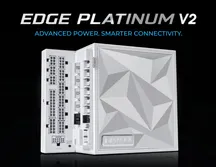
What matters is the direction. The fact that a consumer power supply maker has a 3,200 W unit ready to sell says a good deal about where AI infrastructure is heading: fewer machines, more density per chassis, and an electrical demand that is starting to condition the installation as much as the board itself. If that current ever reaches retail catalogues, it is worth remembering how the topic is handled in a build: reviewing the connector thermal monitoring Lian Li introduces in its Edge V2 units or going over what happens when two RTX 5090s approach 1,450 W is more useful than looking only at the wattage figure.
The usual advice, now with more reason: wattage is the last number you should look at. Ahead of it come the quality of the +12 V rail, the protections and the headroom of the connectors. With 3,200 W in play, a poorly seated connector stops being an anecdote.