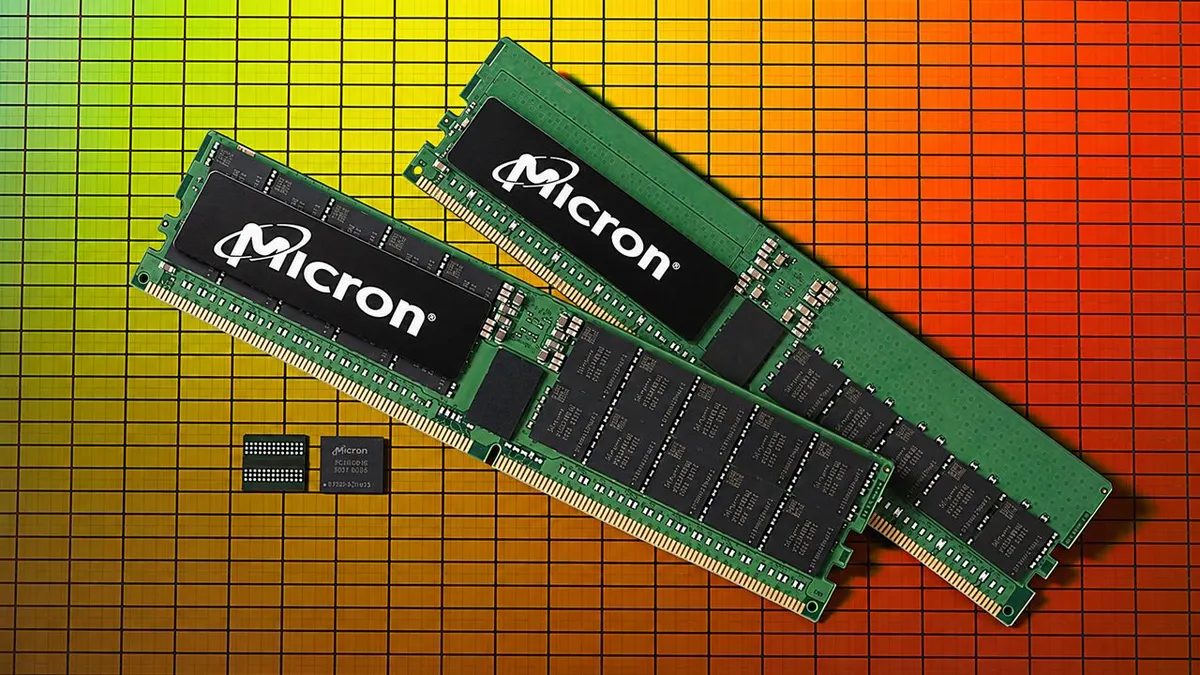
Micron does not expect the RAM market to ease. During the presentation of its results for the fourth quarter of its 2026 fiscal year, its CEO, Sanjay Mehrotra, said that memory and storage supply and demand conditions will be “much tighter” in fiscal 2027 and 2028 than in 2026. It is worth framing this for what it is: the company’s own forecast for its upcoming quarters, not a settled fact.
What Micron has said about DRAM supply
The figure that sums up the forecast is a sales commitment, not a capacity headline: more than 75% of the DRAM Micron will make in 2027 is already sold in advance through long-term contracts with large customers. In practice, little of that output is left for anyone without a signed agreement.
Industry demand has strengthened since our last earnings call, and we expect memory and storage supply and demand conditions to be much tighter in fiscal 2027 and 2028 than they were in 2026. AI is becoming super intelligent, and memory enhances this intelligence and the competitiveness of our customers’ platforms.
— Sanjay Mehrotra, Chairman and CEO, Micron Technology
Why AI is squeezing the DRAM market
The trigger Micron points to is the accelerated build-out of data centers for artificial intelligence, which consumes large volumes of high-speed memory. Those orders carry higher margins than the consumer market, so production is prioritised towards them and the share left for everyone else shrinks. On top of that sits a physical limit: building a semiconductor fab takes years of planning and investment, so adding capacity does not close the gap from one quarter to the next.
Mehrotra acknowledges that the company has no clear line of sight on when supply and demand will come back into balance. The new plants already planned could narrow the gap in late 2027 and 2028, but supply is not expected to exceed demand, nor are DRAM prices expected to fall in the short term. The scenario lines up with what other players in the sector already assume: Dell warned that the memory and hard-drive shortage will last more than five years, while Anthropic and OpenAI are preparing their own deals to secure memory supply directly at the source.
What it means for anyone building or upgrading a PC
For the end user, a forecast like this means memory stops being a cheap component to adjust. Any device that uses it — from a DDR5 module to a graphics card, a laptop or a board such as the Raspberry Pi — starts from higher production costs, and that puts pressure on retail prices.
Against that backdrop, the practical decision is not to guess when prices will fall but to secure the platform. With DDR5, check that the kit you pick is on your motherboard’s compatibility list and that the EXPO or XMP profile boots at the advertised speed: a module that will not stabilise with the profile enabled is not an upgrade, it is a problem. If the purchase is not urgent, waiting is no guarantee of a lower price; if the machine is already held back by a lack of memory, adding a verified kit remains the sensible path. The only lever that could make components cheaper in the short term would be a sharp slowdown in AI investment, which does not look likely today.
As background context, the Swiss bank UBS already projected that memory will take 64% of global AI spending in 2027; in the opposite direction, Acer’s CEO argues that the shortage is less severe than it appears. Micron’s forecast aligns with the first reading, not the second.