Two moves on the same day point in the same direction: the money flowing into systems able to detect and stop unmanned aircraft. Echodyne has secured a framework contract worth up to $250 million for the Domestic Shield program of the U.S. Joint Interagency Task Force 401 (JIATF-401). At the same time, Fortem Technologies has closed a $50 million Series B round led by Lockheed Martin. Neither figure is immediate revenue, and that fine print is what really explains where the market stands.
Echodyne: 250 million as a ceiling, not as revenue
Echodyne’s contract is an IDIQ — indefinite delivery, indefinite quantity — a vehicle that gives the government a way to buy rather than a closed order. The ceiling is $250 million and the ordering period runs up to 36 months. In other words, the military will be able to order qualifying counter-drone capabilities as specific needs arise, not all at once.
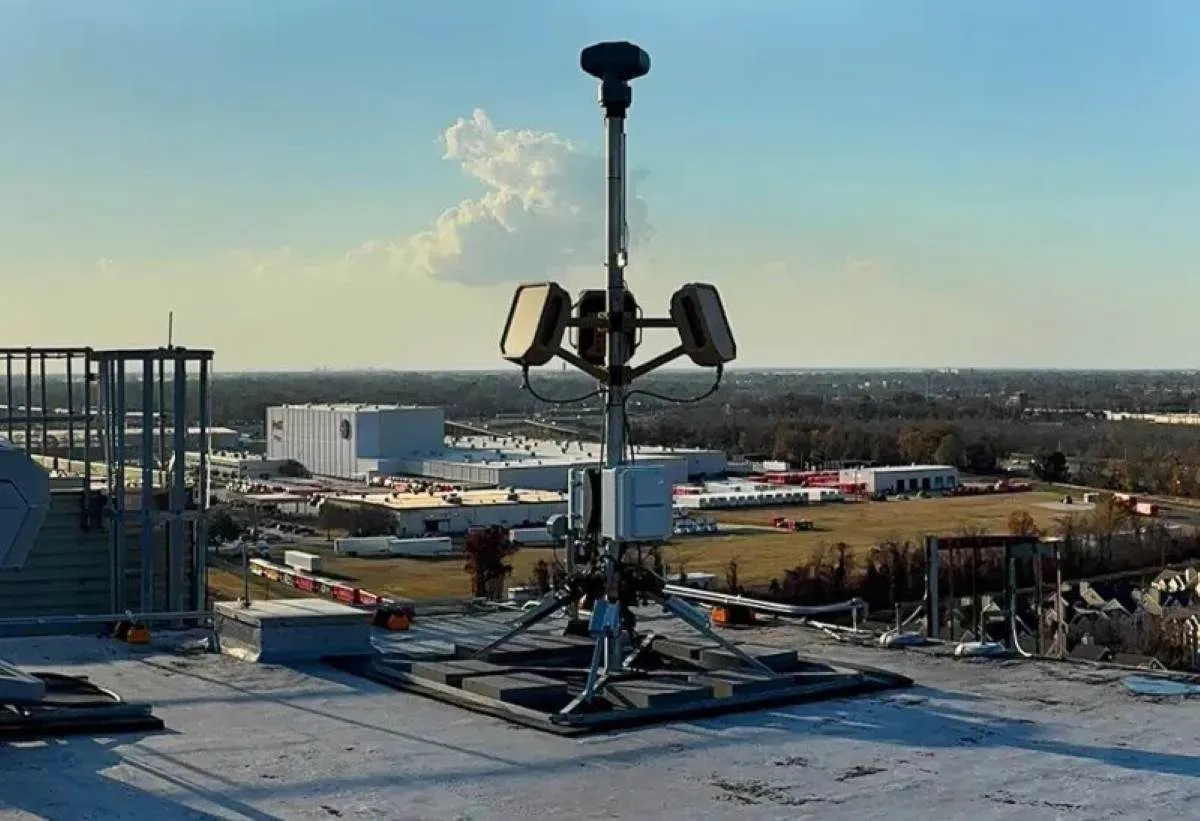
The company’s MESA radars will be available through JIATF-401’s C-UAS marketplace, for both U.S. and allied forces. The technology is called Metamaterials Electronically Scanned Array: a solid-state architecture that steers the beam electronically and promises detailed tracking without the size, weight, power and cost of larger electronically scanned array radars.
The model built for this mission is EchoShield, a medium-range radar with persistent tracking at 10 Hz and angular accuracy of less than 0.5 degrees in both azimuth and elevation. Its machine-learning models classify objects, including fixed-wing and multirotor drones. Its small size and low power draw allow it to be installed permanently, deployed rapidly or mounted on mobile platforms.
“Counter-drone defense depends on knowing precisely where a threat is, maintaining that track and rapidly getting useful data to the systems that can respond,” summarizes Echodyne CEO Eben Frankenberg. Behind the manufacturing capacity, the company recently opened an 86,350-square-foot facility in Washington State, capable of producing more than 30,000 radars a year.
Fortem: 50 million and a partner that also buys
Fortem’s round is not just new capital. Lockheed Martin leads the $50 million Series B and had already committed $25 million in the first tranche, announced earlier this year. Unusual Machines and other strategic and institutional investors are also taking part. For a company based in Lindon, Utah, the backing of the largest U.S. defense contractor is worth as much as the money: it strengthens a relationship that already exists.
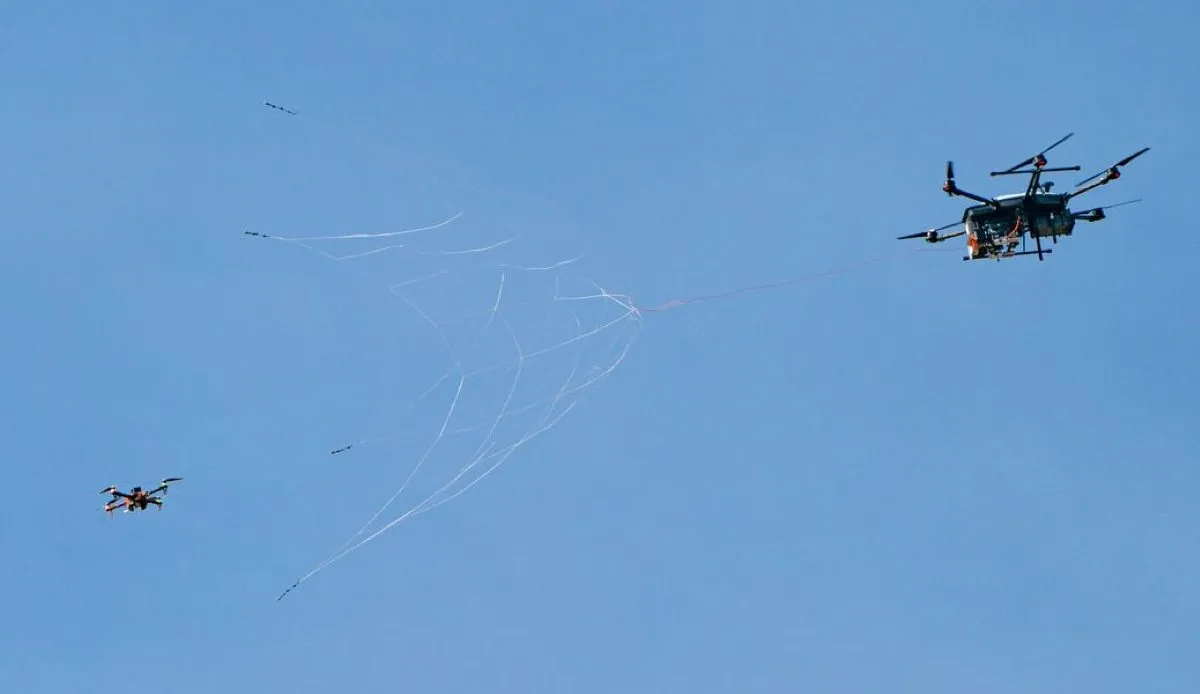
Where the funds go is specific: to accelerate manufacturing at its Utah facility and expand deployments of the SkyDome family, which combines TrueView radar sensors, AI-powered command-and-control software and autonomous DroneHunter interceptors. The system is designed to detect, track, classify and, when called for, defeat aerial threats.
Fortem has stacked up contracts that sketch the size of the market. The Department of Homeland Security (DHS) picked it to protect venues during the 2026 FIFA World Cup; it holds a U.S. Army contract covering the defense of installations worldwide; it is integrating its technology into Lockheed Martin’s Sanctum counter-UAS architecture; and in August it emerged as the only small business selected as a prime contractor on the DHS’s five-year counter-UAS hardware and software contract, with an estimated starting ceiling of $1.011 billion.
“The threat is real, demand is here, and our technology is proven in real-world environments,” says Fortem chief business officer Charlie O’Connell. Stephanie C. Hill, president of Lockheed Martin Rotary and Mission Systems, adds that customers need systems that can be fielded quickly, scaled in volume and adapted as threats evolve.
What changes in the counter-drone business
The two deals tell the same story from different angles. Echodyne sells the sensor that sees and tracks; Fortem sells the full chain that also intercepts. In both cases the buyer is the same — government and armed forces — and the bottleneck has moved from design to production: plants able to build by the thousands and framework contracts designed for buying in volume when need presses.
For the civilian sector, the consequence is indirect but real. The same low-cost radar technology deployed to protect a base ends up shaping the price and availability of the systems that watch airports, stadiums or critical infrastructure. And all of this is happening while low-altitude airspace fills with unmanned aircraft and the regulatory fight over who can fly and where remains open, as shown by the lawsuit filed by fifteen states against the FAA over drone delivery.
The open question is not whether more money will come, but how much of this $250 million and $50 million turns into deployed radars and interceptors in service. Framework contracts run out by being ordered from, not by being signed.