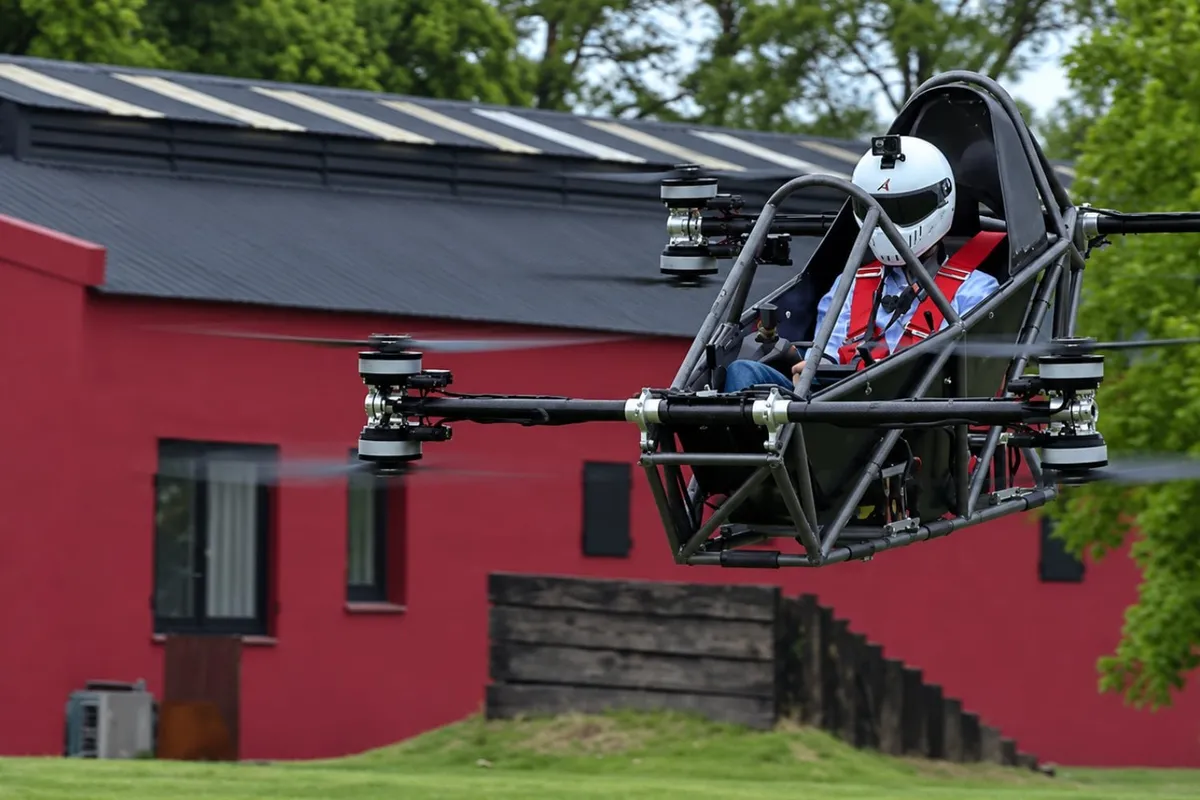
An electric vehicle that takes off vertically, weighs around 115 kilograms and has already flown with a person on board. That is the Atol Mamba, a single-seat eVTOL developed in Argentina by a team that started the project when several of its members were still in secondary school.
The eVTOL category (electric vertical take-off and landing) groups aircraft that take off and land vertically, like a helicopter, but with electric motors and propellers. The Mamba belongs to that group and is backed by Atol Tech, a company founded by Nicolás Maculan, Matías Felizia and Francisco Yennaccaro together with students and professionals in mechanical, aerospace, industrial and electronic engineering.
What the Atol Mamba is like: eight motors and take-off without a runway
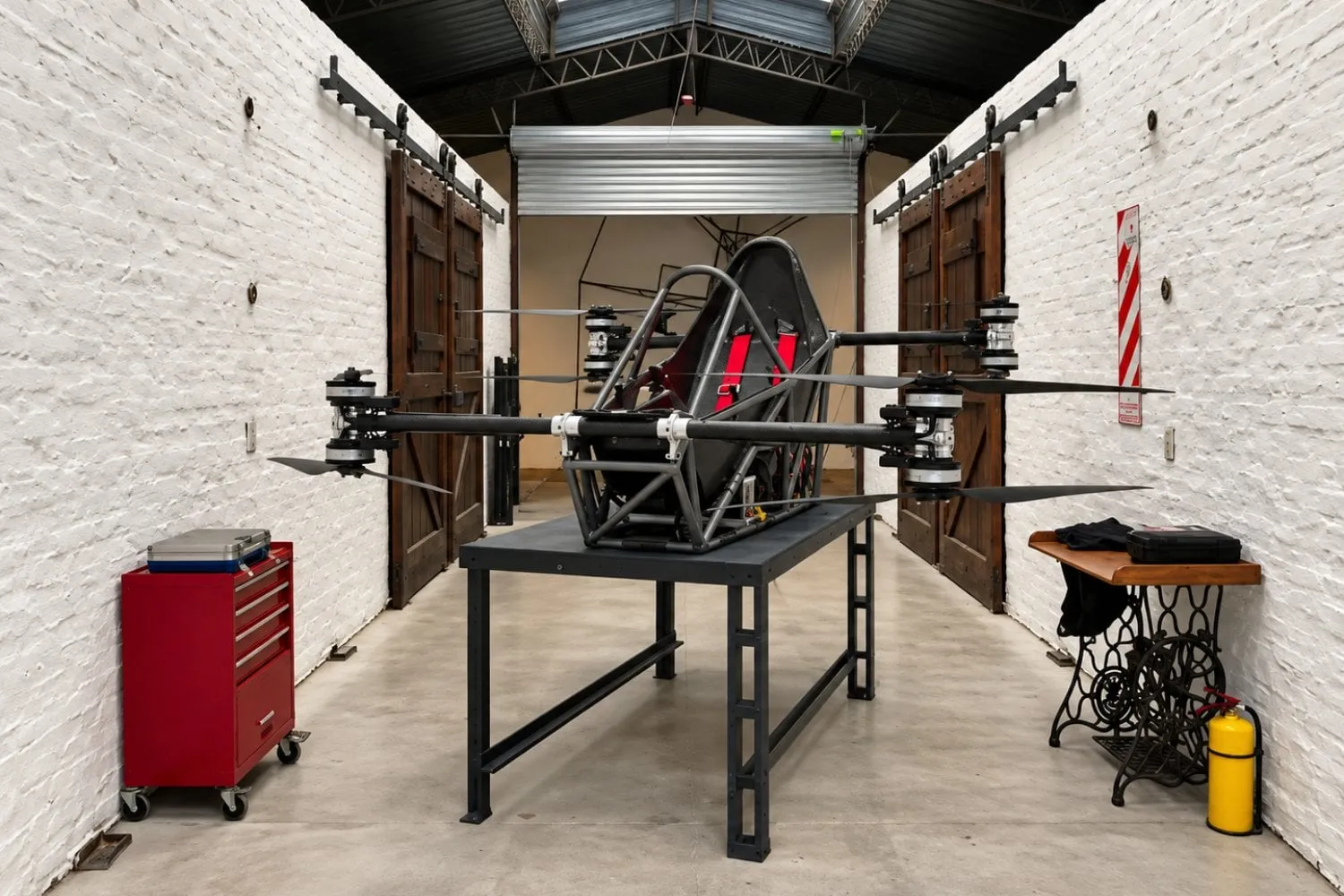
The Mamba relies on eight electric motors arranged in coaxial pairs: two propellers mounted on the same axis. That configuration generates enough thrust for vertical take-off and, at the same time, adds redundancy. According to its developers, each motor has an independent power supply, so a single failure should not immediately translate into a total loss of lift.
The aircraft also carries redundant sensors and a flight computer that assists the pilot with tasks such as maintaining stability, controlling tilt and managing vertical movements. The control system borrows ideas from the world of drones, although its creators stress that this does not mean it can be flown without specific training.
Up to 70 km/h and around 20 minutes of flight
In the first tests, the Mamba reached speeds of up to 70 km/h and flight times close to 20 minutes. The company’s goal is to reach 25 or 30 minutes of endurance per charge.
The prototype weighs around 115 kilograms empty, batteries included, and uses lithium packs designed to be swapped quickly. Atol estimates the full swap can be done in under two minutes, which would shorten the turnaround between flights. On the safety side it includes a cell to protect the pilot, a four-point harness and a ballistic parachute capable of slowing the entire aircraft in a serious emergency.
From a student idea to a company and the regulatory challenge
The Mamba’s origin lies in projects some of its members did during secondary school. Interest grew after engineering competitions linked to aerospace technologies and ended up leading to the development of an aircraft of their own. In April 2026 the group formalised Atol Tech S.A. to continue testing, technical development and possible future production.
The fact that the vehicle takes off and carries a person does not mean it can already be used freely. The company is in talks with Argentina’s National Civil Aviation Administration to determine under which category an aircraft with these characteristics could be certified. eVTOLs mix elements of drones, helicopters and electric aircraft, so they open regulatory fronts in licensing, maintenance, batteries, operating spaces and emergency procedures.
Atol imagines recreational and sporting applications, and even uses in hard-to-reach areas. Against a landscape like that of consumer drones, where a clear reference already exists such as the Antigravity A1 with an integrated 360 camera, the Mamba’s difference is that it aims to carry a person, not a camera. Before certifying anything it will have to prove it can fly safely and repeatably; for now, it has already cleared an important barrier: it stopped being a classroom idea and put someone in the air.