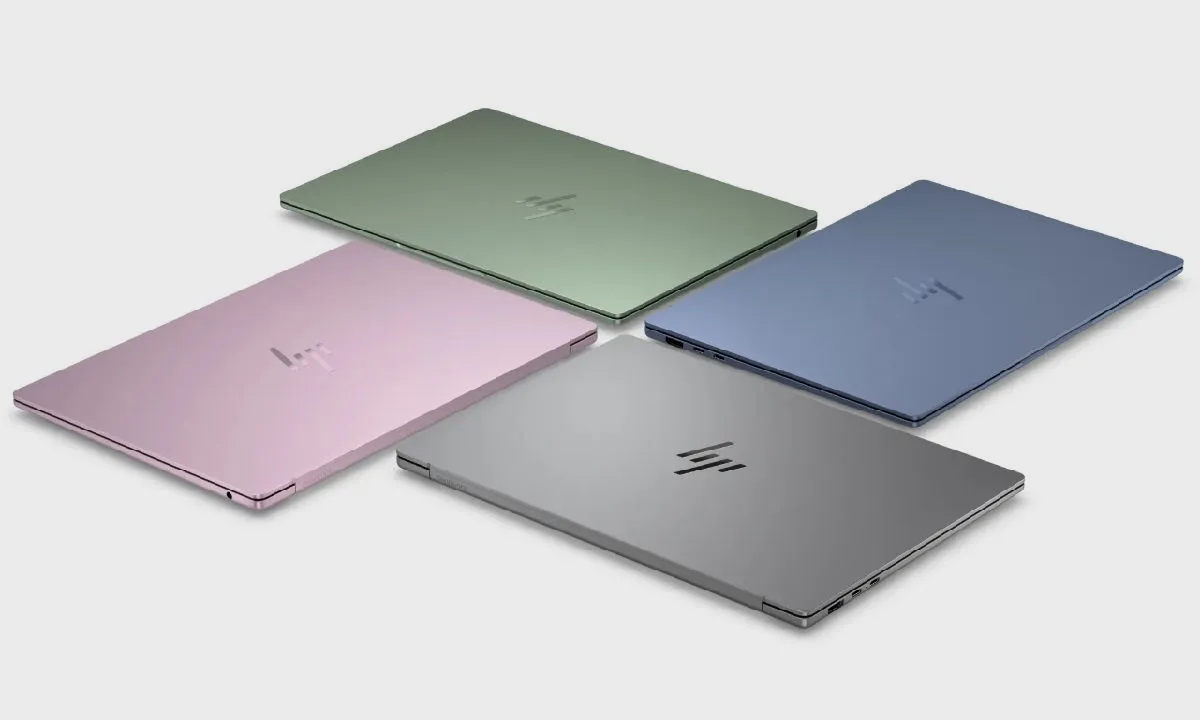
HP has unveiled the OmniBook 5, its new mainstream laptop, a 14-inch machine betting on an OLED display and a very light metal chassis to position itself against Apple’s MacBook Neo. It arrives internationally this October for $699, with Windows 11 preinstalled and Intel Wildcat Lake processors as its platform.
The move is not isolated: it is the coordinated response from Windows partners — ASUS, Dell, Acer, Lenovo and HP, backed by Intel and Microsoft — to a MacBook Neo that, despite its restrained hardware, has sold extremely well. The OmniBook 5 aims to replicate the formula of mobility and a tight price, but with an asset Apple’s model lacks: an OLED display instead of an LCD-IPS panel.
What the HP OmniBook 5 brings
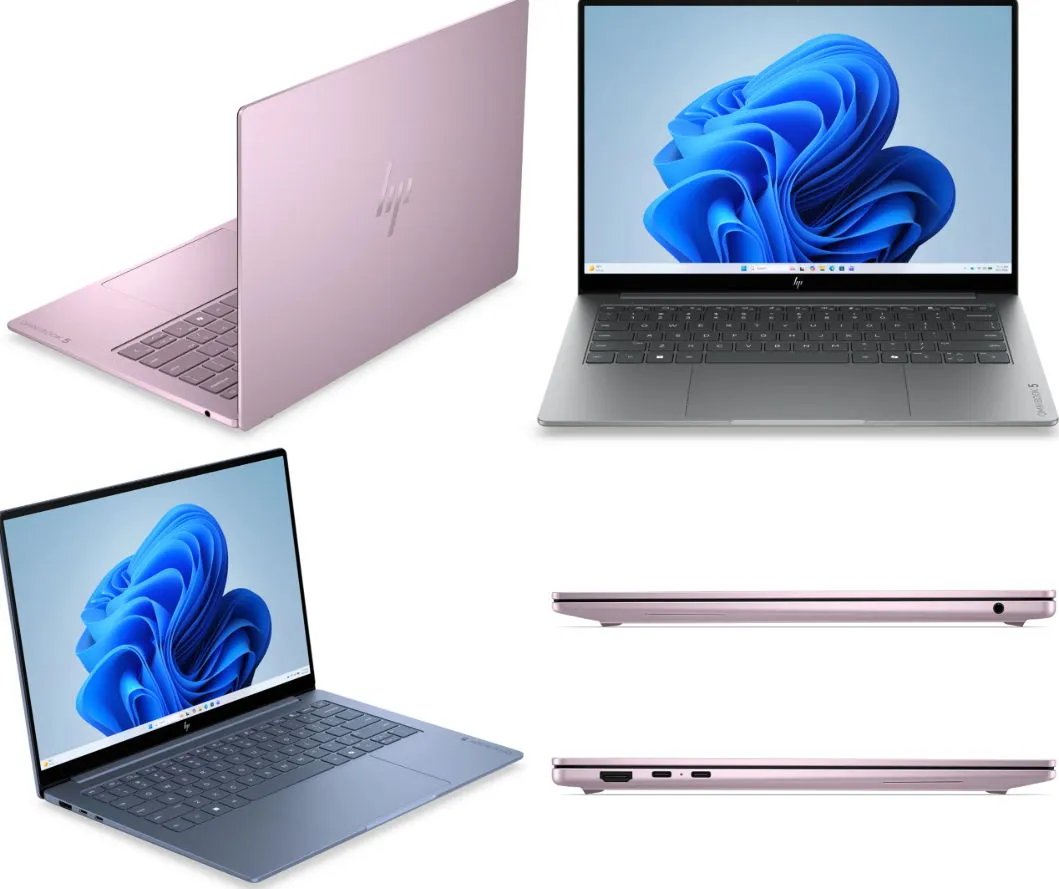
The display is the main argument. HP fits a 14-inch OLED panel with multitouch technology, native resolutions up to 2.5K and a hinge that opens up to 180 degrees. The whole package travels in a metal chassis just 11.77 mm thick and 1.1 kg, figures that place it in the extreme-mobility territory where the Neo competes.
On the hardware side, the base configuration starts with an Intel Core 5 315 from the Wildcat Lake family, the range Intel designed precisely for budget laptops, and scales up to a Core 7 350. Memory starts at 8 GB of RAM and a 256 GB SSD, although the manufacturer will offer higher options, including configurations with 12 GB of RAM.
For connectivity, the OmniBook 5 includes two USB-C ports, an HDMI output, a Full HD infrared camera, a dual-speaker system with DTS:X Ultra, a pair of microphones, Wi-Fi 6E and Bluetooth 5.4. It will be sold in four colour finishes.
Why it matters
The arrival of the OmniBook 5 confirms that the Windows entry range has stopped competing on price alone. Betting on OLED in a budget machine is a tangible advantage over the MacBook Neo’s LCD-IPS panel, especially in colour coverage and contrast, and it is the kind of detail you notice in real use rather than in a specs table.
The context, moreover, is demanding. The semiconductor crisis has stretched component prices, and Microsoft is still dragging doubts about Windows 11 adoption. In that scenario, a $699 price is not aggressive on its own: it is the result of very fine tuning to avoid missing the mainstream train.
Battery life deserves a separate mention. HP claims up to 42 hours in local video playback, a lab figure that should be read with distance: under heavy use it will be considerably lower. Even so, if it gets close to half of that in browsing and office work, we would be looking at one of the most solid batteries in its segment.
Microsoft ruled out Surface competing against the MacBook Neo, but the rest of the Windows ecosystem has decided otherwise, and the OmniBook 5 is the most recent example.
Who it is for
The OmniBook 5 fits anyone who prioritises mobility, display and battery life over raw power: students, light remote work, browsing, multimedia and the occasional game. At 1.1 kg and an 11.77 mm profile, it is a machine to carry around every day without thinking about it.
There are limits worth being honest about. The starting 8 GB of RAM and 256 GB SSD falls short for heavy multitasking, editing or many years of use, so it is worth looking at the 12 GB options. And anyone who needs sustained performance or a dedicated GPU should aim at another range: the goal here is to last the day, not to squeeze the first minute of a benchmark.