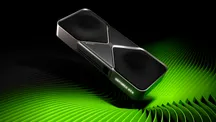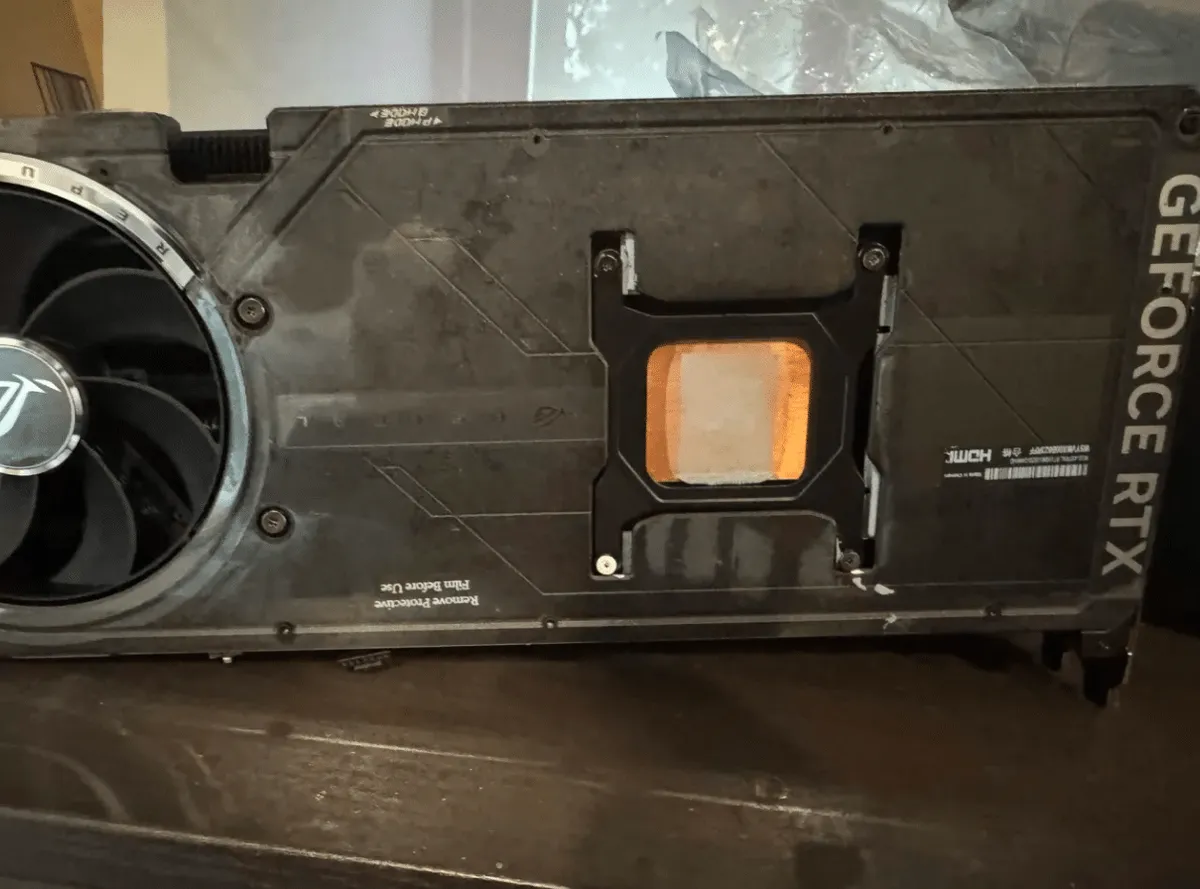
A Reddit user known as Salty-Mirror9498 bought a second-hand GeForce RTX 5090 through Amazon Canada and, upon opening the package, found the card had neither a GPU nor a PCB inside: the shell was empty. The case, posted in the r/pcmasterrace subreddit, joins the list of high-end graphics card scams in the used market.
The buyer paid CAD 4,500, about EUR 2,800 at the exchange rate. According to his account, the listing came from “Warehouse Deals”, Amazon’s own inventory of used and refurbished products, which gave him the confidence to spend that amount. The company says it checks the quality of every product that goes through that channel, but in this case the inspection did not catch that the main component was missing.
An empty shell: no graphics chip and no board
Salty-Mirror9498 recorded an unboxing from the very moment he opened the order, a practice that ended up being key to documenting what happened. When inspecting the card, he discovered that not only the graphics chip was missing: the printed circuit board (PCB) that carries the rest of the electronics was gone too. This was not a faulty or incomplete RTX 5090, but a shell with no components.
In the thread’s replies, some users blamed the buyer for trusting an external seller. The nuance matters: “Warehouse Deals” is not just any third party. It is the second-hand inventory managed by Amazon itself, so the product went through the company’s own pipeline and, in theory, its quality control. For the buyer, that label was a reasonable guarantee; the episode shows that not even that seal removes the risk when the tampering is deliberate.
What changes when buying a used RTX 5090
The case leaves several practical lessons for anyone considering a second-hand graphics card, especially in the high-end segment where the amounts are large:
- Record the full unboxing. Documenting the opening of the package from the first second is the most direct evidence if you need to file a claim.
- Check the weight and the contents. An RTX 5090 without a PCB weighs far less than it should; opening the card and verifying that the board and the cooler are complete avoids surprises.
- Use channels with buyer protection. Despite the inspection failures, the purchase went through a platform with a claims process, something that does not exist in a private sale.
- Be wary of abnormal prices. Although the amount here was the market price, an excessive discount on a high-end GPU is a common warning sign.
Amazon has not commented on the case and the user has not confirmed whether he got his money back. The episode reinforces a simple idea: in the used market, the price per frame is still calculated the same way, but the risk of receiving an empty shell is a cost that no performance benchmark reflects.
A used market that demands verification
The RTX 5090 is currently Nvidia’s flagship, and its launch price makes it an attractive target for fraud. This case is not a failure of performance or efficiency, but of control in the resale chain: the card physically arrived, but it was not a card. Cases such as the RTX 5090 signed by Jensen Huang bought second-hand, however, show that the used market can also deliver pleasant surprises. The difference, at both extremes, lies in how much is verified before and after paying.