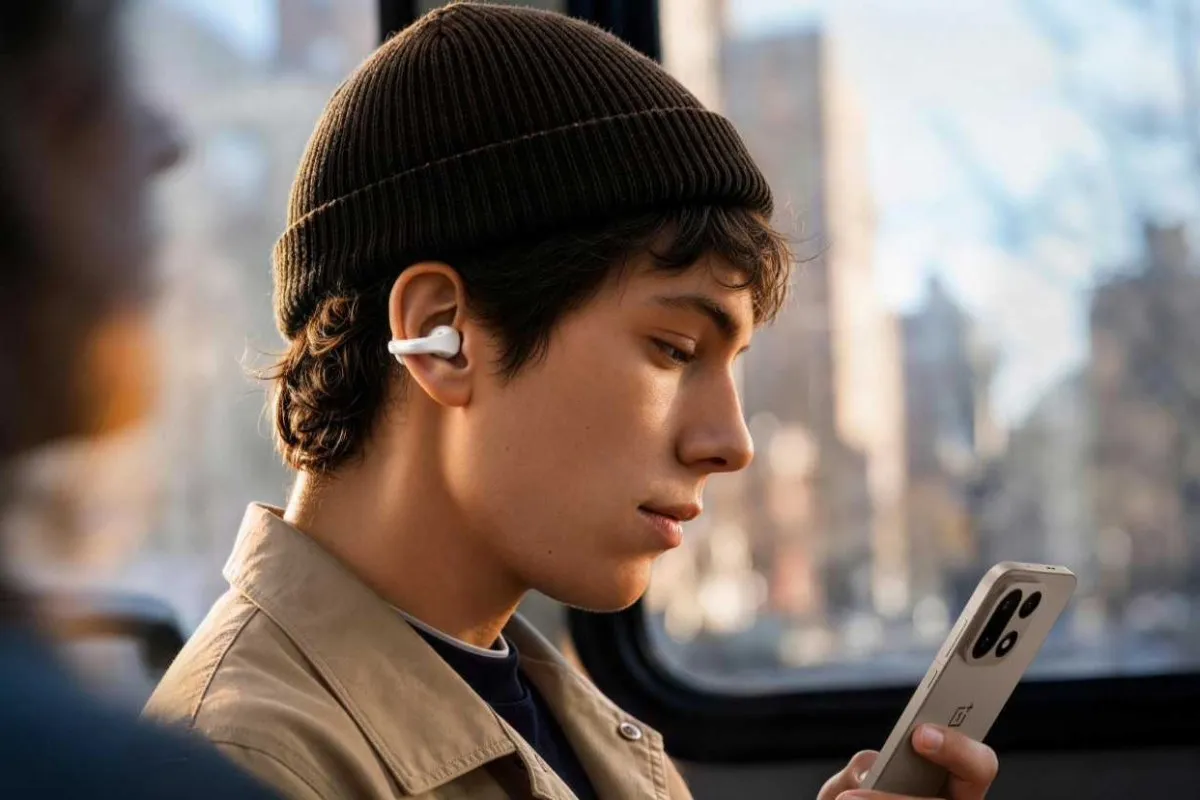
The OnePlus Buds Clip already have a product page on the brand’s global website. They are its first clip-on earbuds, and the format is the one consolidated by the category the Bose Ultra Open Earbuds established: a capsule that hooks onto the ear with an arch, without inserting anything into the ear canal. The official page confirms two drivers per unit, 5.2 grams of weight and up to 40 hours of use with the case. What appears nowhere on the page is the price or the list of countries.
The announcement arrived without a public presentation: the company posted the product page and the media detected it afterward. It is worth clarifying from the start that the product had already been covered by Spanish-language media on 23 and 24 October, so what this piece contributes is not an exclusive, but the contrast between the official page and what had been published.

An arch that holds the earbud without plugging the ear
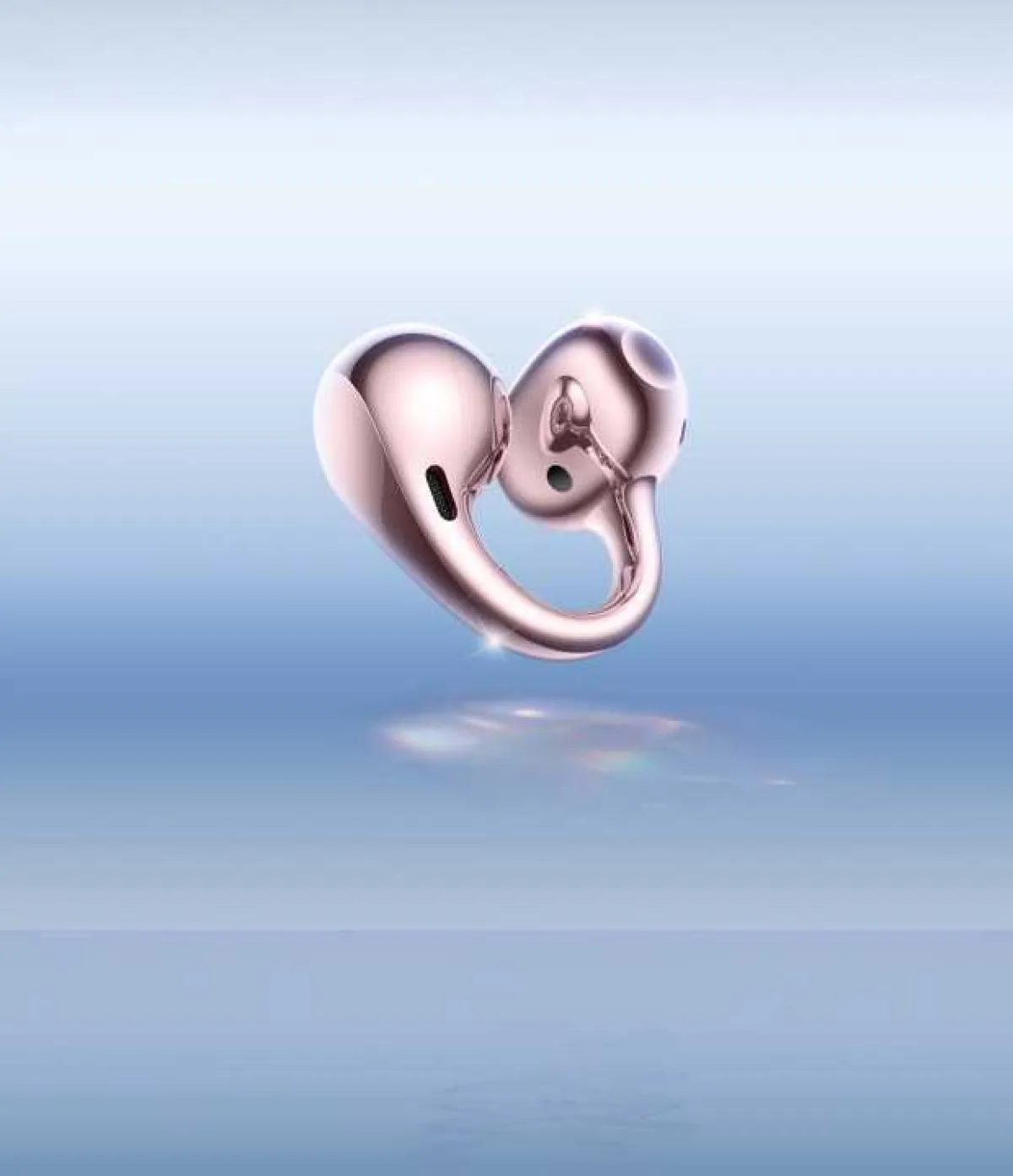
The retention system is a C-shaped arch of nickel-titanium alloy that OnePlus describes as thinner and lighter than a titanium wire, and which recovers its shape after bending. The brand states that the part has been tested through more than 30,000 flexes and recommends not forcing the clip during use. The declared weight is 5.2 grams per earbud, a figure the brand links directly to comfort during prolonged use.
The page adds two unusual details. The first is symmetry: the stereo channels are assigned automatically according to the ear each unit is placed in, so there is no need to distinguish left from right, and a single earbud still reproduces stereo. The second is the drop monitor, which alerts the phone when one of the two pieces comes loose. The company also declares a “Comfortable Fit” certification from TÜV Rheinland, which evaluates wearing comfort, not sound quality.
There are three finishes: Pearl White, Pebble Gray and Twilight Rose.
What the OnePlus Buds Clip offer acoustically
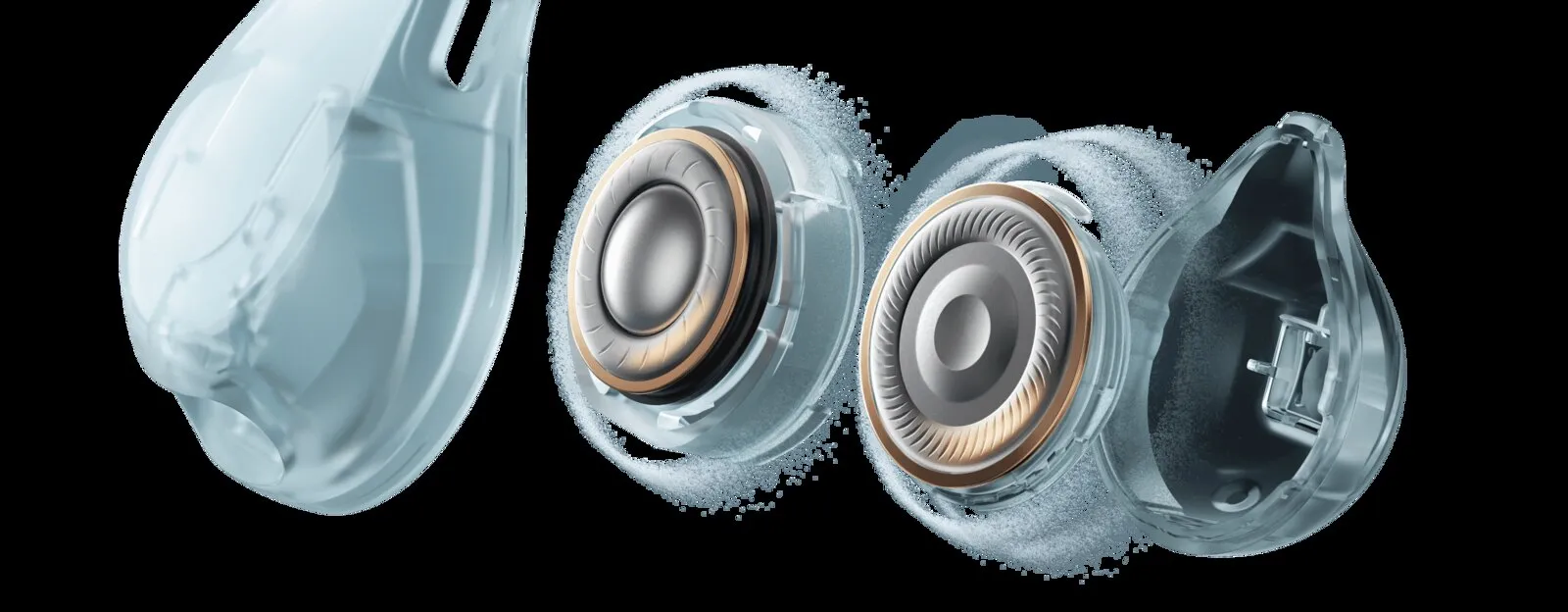
Each earbud carries an 11 mm woofer and a 9 mm tweeter, each with its own digital-to-analog converter. The tonal tuning was done together with Dynaudio, a Danish high-fidelity speaker firm, and the brand presents it as a profile faithful to the recording. It is a statement of intent, not a measurement: there are still no published response curves or independent reviews.
In connectivity, the Buds Clip use Bluetooth 6.1, support LHDC 5.0, AAC and SBC, and keep two devices linked at the same time. High-resolution audio is only available with LHDC 5.0 on Android and, according to the page itself, does not work on iOS. For calls there are six microphones with bone-conduction pickup and a dedicated 6 nm audio chip that runs the voice noise reduction algorithm.
Sound leakage is the structural weak point of any open design, and here OnePlus attacks it with a system it calls Dipole Sound-Field: the rear grilles emit inverse waves to cancel part of the energy that would escape outward. The technology reduces leakage, it does not eliminate it, and the brand recommends lowering the volume in quiet environments for hearing health.
Simultaneous translation deserves a separate caveat: the feature is only available on certain OnePlus phones with OxygenOS 15.0.1 or later, and the supported languages depend on the application. It is not a universal feature of the earbud.
Battery life and resistance: the figures, with caveats
The 40 hours in the headline include the case. Per charge, the declared battery life drops to 9.5 hours, and both figures correspond to the AAC codec at 50 % volume. With LHDC, consumption rises and the total comes to 36 hours with the case and 8 hours per charge.
| Codec | With case | Earbuds only |
|---|---|---|
| AAC | 40 h | 9.5 h |
| LHDC | 36 h | 8 h |
Water and dust resistance is IP55, but only for the earbuds: the case does not have it. The documentation itself warns that intense exercise should be avoided because of sweat, that the pieces should be dried before storing them, and that the warranty does not cover damage from liquid or dust. These are usual conditions in this segment, but they fit poorly with the sports use that an open design suggests.
Who it makes sense for and where it falls short
The clip-on format gives something up in exchange for comfort. Because it does not seal the ear canal, passive isolation is low by construction: on the subway, on a plane or in a noisy office the environment will compete with the music, and the page does not mention active noise cancellation for playback, only for calls. In exchange, there is no pressure in the canal, they can be worn for hours and awareness of the surroundings is preserved, which is exactly what you look for when walking or riding a bike.
The second limit is leakage. The inverse-wave system helps, but an open design emits outward by definition, and in a library or a quiet train car it will be noticed sooner than with closed in-ears.
On price there is no possible verdict: OnePlus has not published it. The rivals in the format already have a reference point —the second-generation Bose Ultra Open stay at $299 and the Ugreen ClipBuds Pro 2 at 99.99—, but without the OnePlus figure any comparison would be speculative. The brand does not detail the countries either, and its withdrawal from the phone market in Europe and the United States makes it necessary to wait for confirmation before taking the arrival in Spain for granted. Without those two pieces —price and availability— the value-for-money question stays open. What can be decided already is the fit: anyone who prioritizes isolation should keep looking at a closed in-ear; anyone who wants to hear the surroundings without taking anything out of the ear has here an option with two drivers per unit and a case that doubles the battery life.